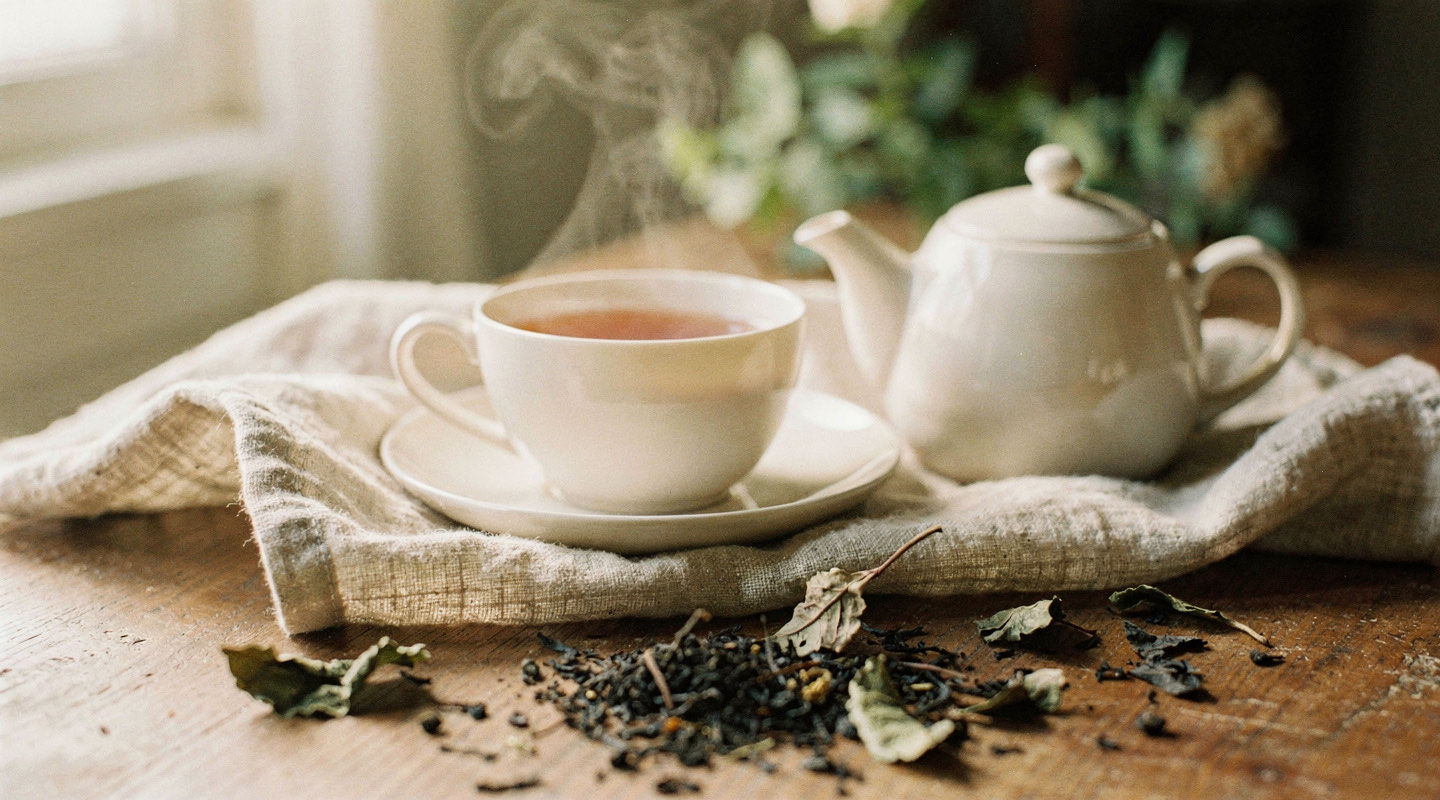
You have swirled the cup, turned it over, and lifted it. Now there is a scatter of dark leaves against white porcelain, and something in it looks almost like a bird.
This is the point where most people reach for a list. The lists exist, they are old, and they are genuinely worth knowing. But the thing nobody tells you at the start is that the list is a vocabulary rather than a code, and knowing that changes how you use it.
There Is No Official Dictionary
It is worth saying this before any list, because it saves a lot of frustration.
Tasseography has never had a single authorized set of meanings. The symbol vocabulary was carried by families and by individual readers, it varies between regions, and two experienced readers can give you different readings of the same cup without either being wrong. Any source presenting a fixed and complete dictionary has tidied up something that was never tidy.
What the traditional meanings give you is a starting point and a shared language. They are the accumulated sense of what a shape has tended to suggest to a great many people over a long time. That is genuinely useful. It is just not a lookup table.
The Most Common Symbols
These come up more than any others, and they are the ones worth actually learning.
- Circle or ring. Completion and wholeness, a cycle closing so another can open. An unbroken circle is traditionally one of the better signs in the cup; a broken one is read as something not yet finished.
- Heart. The most consistently positive shape in the vocabulary. Love, warmth, and emotional connection, read as an affirmation rather than a prediction.
- Bird. News arriving. A bird in flight is generally read as news travelling toward you, one at rest as news waiting to be delivered.
- Ship. A journey, or a longer stretch of time. Often read less literally than people expect, meaning a significant passage rather than an actual voyage.
- Tree. Growth, roots, stability. A tree in full leaf is health and steadiness; a bare one suggests something needing attention.
- Cross. The heaviest of the common symbols. Traditionally a burden, a test, or a crossroads requiring a decision. Readers usually soften this considerably, and rightly so.
- Rose or flower. Good fortune and things worth appreciating. Frequently read as a prompt to notice what is already going well.
- Star. Hope and direction. One of the shapes readers are happiest to find.
- Snake. Caution, usually about someone rather than something. This is the symbol most likely to be over-read, so treat it gently.
- Mountain. An obstacle, or an ambition, depending on whether you are looking at it or standing on it.
Where the Symbol Sits Matters Too
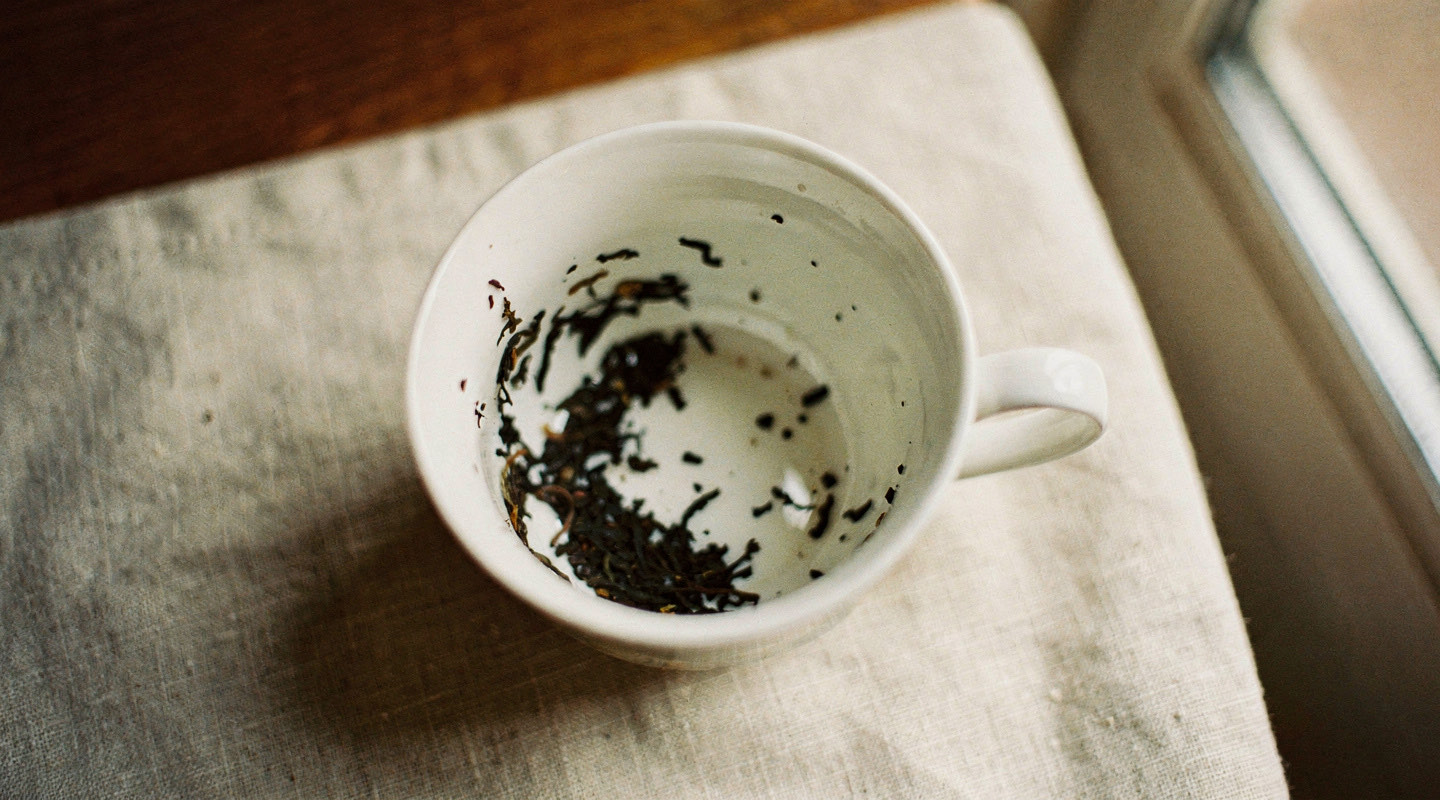
Position does as much work here as it does in a coffee cup, and along similar lines.
The rim is the near term and the immediate. The middle of the cup is the medium distance. The bottom is the past, or matters that are settled, buried, or slow to shift. The handle stands for the person whose cup it is, so shapes near it are close to home and shapes far from it are further away in either distance or time.
Size and clarity matter as well. A large, unmistakable shape is treated as more significant than a faint one you had to work for. If you find yourself tilting the cup to make something appear, it is not really there, and a reader who is honest will say so.
If this framework feels familiar, it is because the two traditions borrowed from each other for centuries. Where a symbol sits in a coffee cup uses very nearly the same map.
Reading the Cup as a Whole
Individual symbols are the least interesting part of a good reading. What experienced readers actually work with is the overall impression first, and the details second.
Start with the balance. Is the cup crowded or sparse? Are the leaves clustered on one side, or spread evenly? A dense cup is usually read as a busy period, a sparse one as a quiet or settled stretch, and neither is better than the other.
Then look for the one or two shapes that genuinely stand out, and consider how they sit in relation to each other. A bird next to a ship reads differently from a bird next to a cross. The tradition treats the cup as a scene rather than a list, and the relationships within it carry the meaning.
Resist the urge to account for every mark. Most of what is in the cup is just tea.
What the Practice Is Actually For
Here is the part worth holding onto.
Tea leaf reading is not a forecast. It is a structured way of paying attention, and its real value is in the pause it enforces. You make a pot properly, you drink it slowly, you sit with something ambiguous, and then you talk about your life with someone for twenty minutes using a shape in a cup as the excuse.
That is a good hour regardless of whether a single symbol means anything. The ambiguity is the mechanism, not a flaw in it. A shape that could be several things invites you to say which one it looks like to you, and what you say is usually the interesting part.
Read this way, it belongs in the same family as the quiet attention of mindfulness rather than in the business of prediction. If you want the practical side, how a tea leaf reading is actually performed covers the loose leaf, the swirl, and the turn. And if you like the habit of reading meaning into an image, the symbols that recur in dreams work on much the same principle.
Put the kettle on. The rest follows.