Twice a year, day and night come into perfect balance. In late September the scales tip, the dark half of the year begins, and for as long as people have farmed, this moment has been marked with harvest tables, gratitude, and warm drinks shared slowly.
You do not need an altar or an ancient calendar to honor it. You need a kettle. A tea ritual is the gentlest possible way to greet autumn, and if you save the leaves at the bottom of the cup, it can end with a little fortune-telling too. Here is how to do the whole thing, from blend to reading.
What Is the Autumn Equinox?
The equinox is the moment the sun crosses the celestial equator, making day and night nearly equal everywhere on Earth. In the Northern Hemisphere it falls in late September; this year it lands on September 22. From that day until spring, the nights outlast the days.
Cultures across the world have long treated this as a threshold. Harvest festivals cluster around it, and in modern pagan traditions the day is celebrated as Mabon, a feast of gratitude for what the year has produced. Whatever your tradition, the underlying invitation is the same: pause, take stock, and turn inward as the light does.
Why Tea Belongs to This Threshold
Every equinox custom, old or new, seems to reach for a warm cup. Herbalists mark the day with spiced blends and golden milk; harvest tables end with tea; even a simple evening chai counts as a seasonal rite if you drink it with attention.
Tea suits the moment because it enforces slowness. Water must boil, leaves must steep, and the cup must cool before you can drink it. Those few unhurried minutes are the whole point. And unlike the coffee tradition we love just as dearly, tea leaves you with readable leaves at the bottom, which makes it the natural choice for a ritual that ends in reflection.
Blending a Cup for the Season
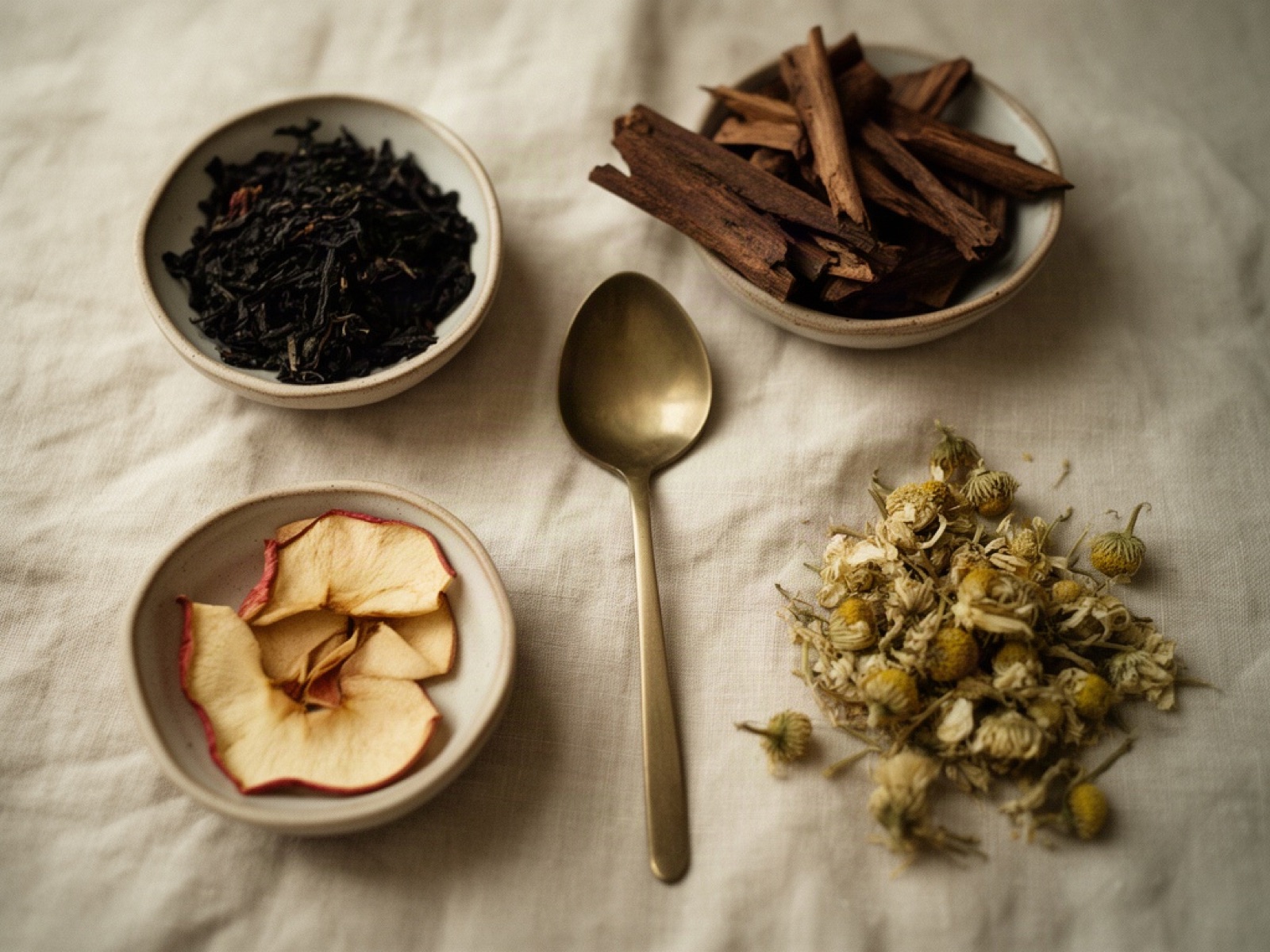
Any loose-leaf tea you love will serve, but autumn rewards a blend with some warmth in it. Build from a base of black tea, which gives body and plenty of readable leaf, then add character:
- Cinnamon bark for sweetness and spice, the signature of the season
- A crushed cardamom pod for fragrance
- Dried apple or orange peel for a harvest note
- Chamomile, long associated with peace and balance, if you are blending for the evening
Use roughly a teaspoon of the blend per cup, and brew it loose. This matters for what comes later: tea bags leave nothing to read. Let the leaves swim free in the pot or the cup itself, the way readers have always brewed.
A Simple Equinox Tea Ritual
There is no single correct liturgy. This one is quiet, short, and asks for nothing you do not own.
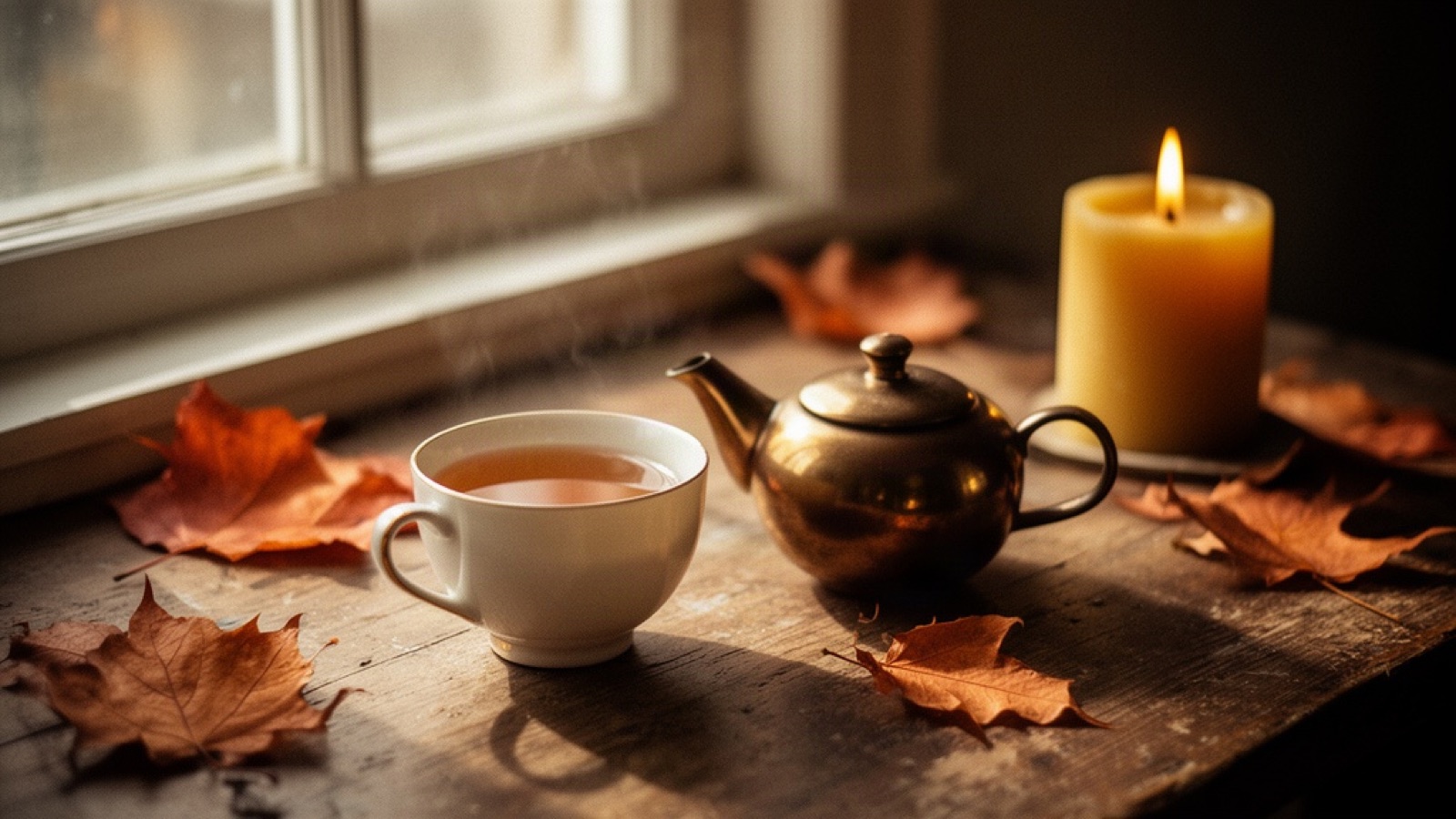
- Clear a small space. A corner of the table by a window is enough. Add something from the season if you like: a few fallen leaves, an apple, a lit candle.
- Brew slowly and deliberately. Watch the water, watch the leaves. Treat the waiting as part of the ritual rather than a delay before it.
- Sit with three questions. What did this year grow? What am I grateful for? What am I ready to set down as the dark season begins? People have asked versions of these questions at harvest time for centuries. Journal if that helps; some find that mindful attention to the present moment is easier with a pen in hand.
- Drink almost to the bottom. Leave a sip of liquid and the leaves. That remainder is your reading.
Reading the First Fall Cup
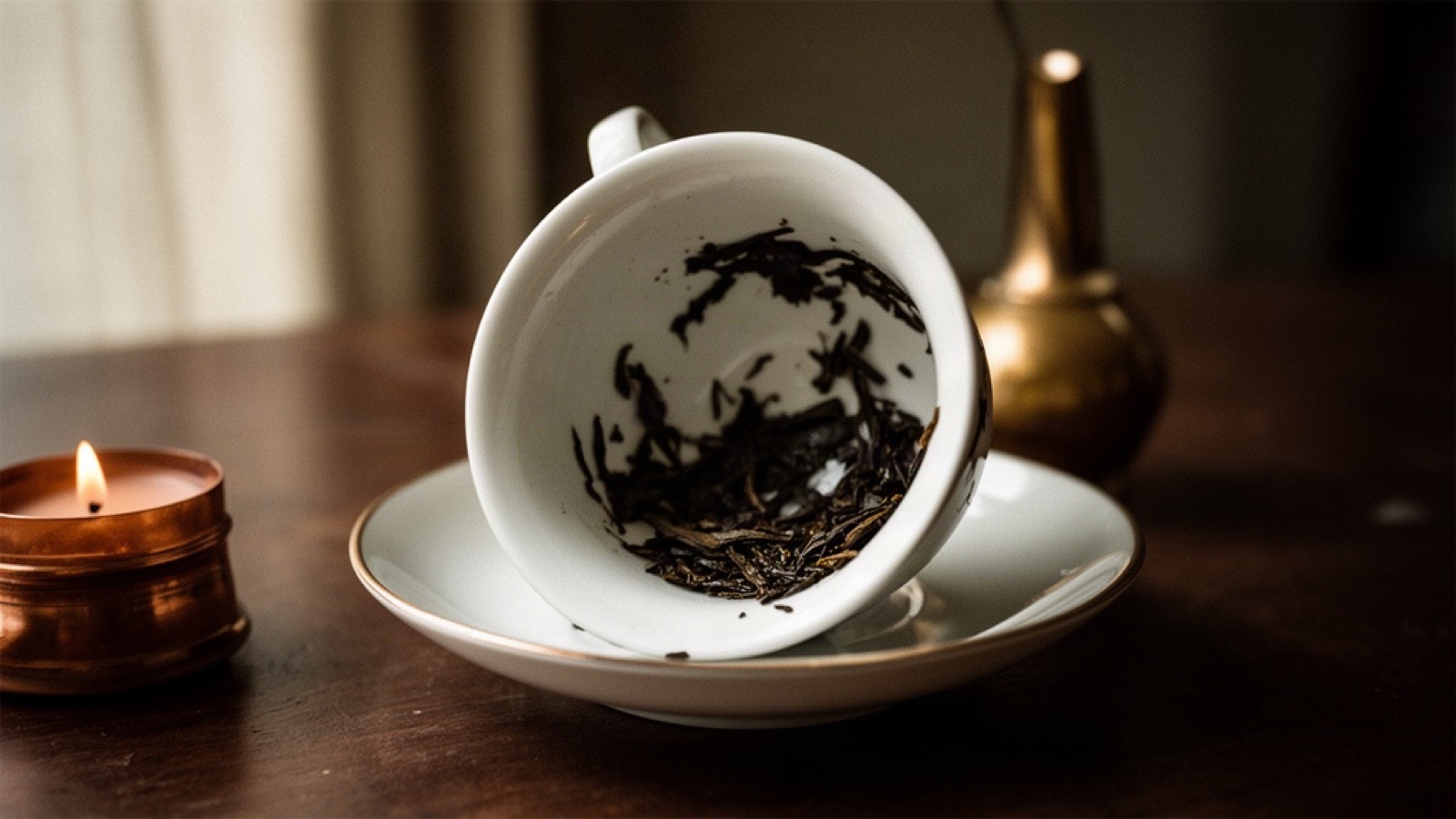
Now the fortune-telling, done the traditional way. Take the cup in your left hand, swirl the last of the liquid three times, and turn the cup upside down onto the saucer. Let it drain for a moment, then turn it back and look at where the leaves have landed.
Readers traditionally divide the cup into regions: shapes near the rim speak to things close in time, shapes at the bottom to matters further off, and the handle stands for home and the questioner themselves. If tasseography is new to you, our primer on what tea leaf reading is and how it is done covers the full method step by step.
At the equinox, it feels right to read with the season’s themes in mind. A bird shape has long been read as news arriving; a tree as growth rewarded; an anchor as stability through a changing time. We keep a fuller list in our guide to tea leaf symbols and what they mean. Remember the spirit of the practice: the leaves do not dictate your winter. They give you images to think with, and at a threshold like this, an image to think with is a fine gift.
Carrying the Ritual Through Autumn
Nothing says this ceremony belongs to one day only. Many people repeat a smaller version weekly through the fall: same chair, same blend, same three questions, one quick look at the leaves. By the winter solstice, when the light begins its return, you will have a season’s worth of small readings and a record of what the dark half of the year asked of you.
However you mark it, we hope your equinox is warm and your cup is full. May the leaves show you kind shapes, and may the season land softly. We wish you a peaceful autumn!