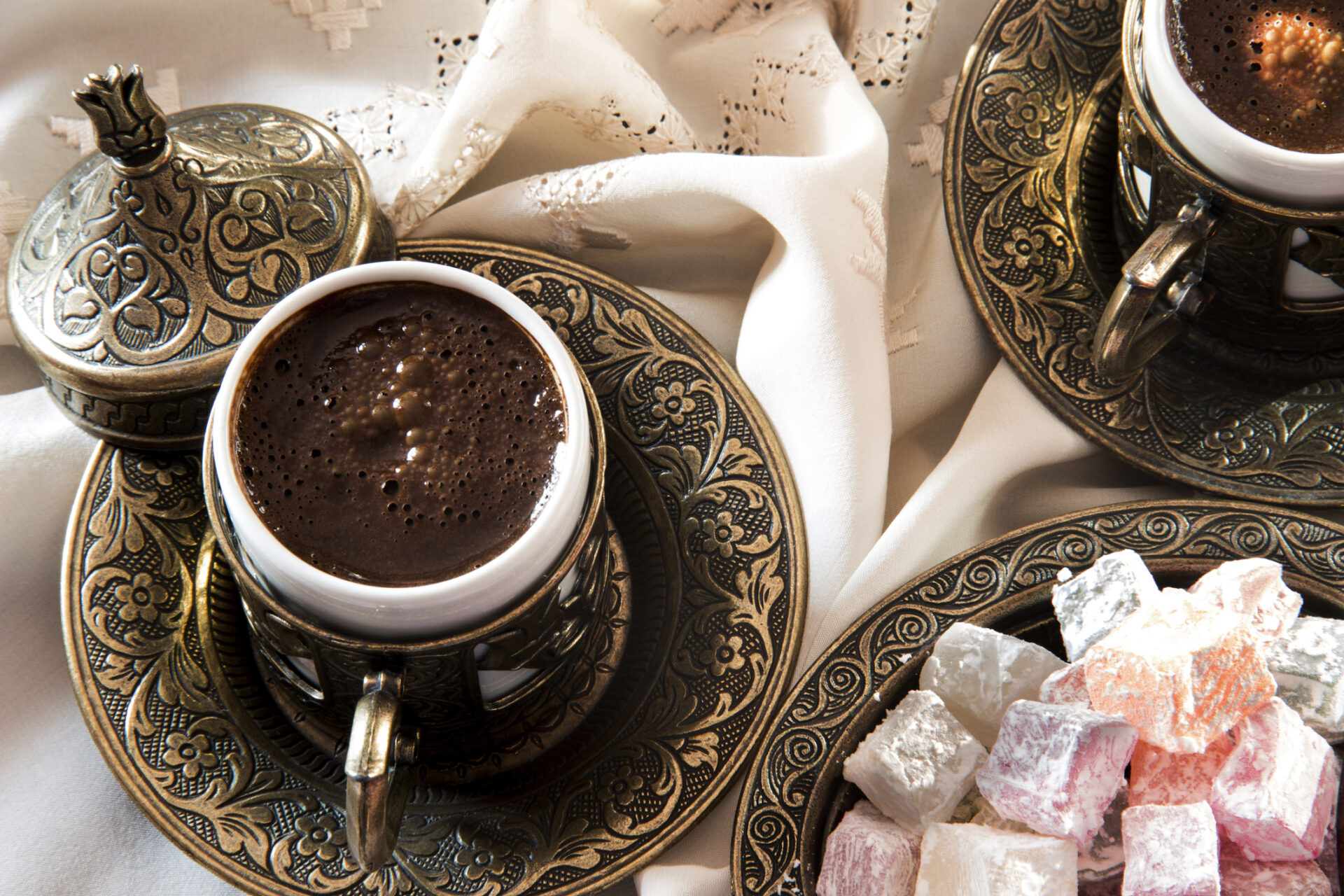

There is a point in late July when the thought of a hot cup, however lovely, simply loses. The kitchen is warm, the afternoon is warmer, and what you actually want is something cold in your hand.
Turkish coffee has an answer for that. Cold coffee has quietly stopped being a seasonal novelty and become the default afternoon drink, and Turkish coffee turns out to take ice beautifully, because it has the body to survive it. So how do you make iced Turkish coffee at home without losing the thing that made you love it hot?
What Makes Iced Turkish Coffee Different?
Most iced coffee is a dilution problem. You brew something thin, pour it over ice, and by the third sip it is closer to cold water than to coffee.
Turkish coffee starts from somewhere else entirely. The grind is powder-fine, far finer than espresso, and the brew is never filtered. Everything that goes into the pot ends up in the cup, including the finest particles that give the drink its weight and that soft, slightly velvety finish. That density is exactly what stands up to melting ice.
It is worth saying that this is a modern way to drink an old drink. Nobody in an Ottoman coffeehouse was serving it over ice. But the preparation is unchanged, and if you already know the classical method with a cezve, you are most of the way there.
The One Rule: Brew Hot, Chill Fast
This is the whole technique, so it is worth stating on its own.
Brew your coffee exactly as you always would, then get it cold as quickly as you can. Coffee left to cool slowly on the counter keeps extracting against the grounds sitting in it, and what you get an hour later is flat and faintly bitter. The aromatics that make a fresh cup smell like a fresh cup are gone by then too.
Fast chilling keeps them. A small metal jug set in a bowl of ice water will take your coffee down in about three minutes, which is roughly the time it took to brew.
How to Make Iced Turkish Coffee at Home

This makes one generous glass. Scale it up by brewing in batches rather than crowding the cezve, since an overfull pot will not build proper foam.
Ingredients:
- 1 heaping teaspoon finely ground Turkish coffee
- 100 ml cold water, plus a little extra for the ice melt
- Sugar to taste, added before brewing rather than after
- Ice cubes, as many as your glass will hold
- Optional: a small splash of cold milk, or a pinch of ground cardamom
Instructions:
- Measure the cold water into your cezve. Cold water, not warm, gives you a slower rise and better foam.
- Add the coffee and any sugar, and stir once while everything is still cold. This is your only stir.
- Set the cezve over low heat. Low is not a suggestion here. Rushing it is the difference between foam and a boil.
- Watch for the dark ring of foam that creeps in from the edge. When it lifts toward the rim, after roughly three to four minutes, take the pot off the heat before it breaks.
- Let it settle for a minute so the grounds sink.
- Pour the coffee into a small metal jug and stand it in a bowl of ice water. Stir the jug gently, not the coffee, until it is properly cold.
- Fill your glass with ice and pour, stopping when you reach the sludge at the bottom of the jug.
That last step is a choice, not a rule. Leave the grounds behind for a cleaner drink, or let a little through if you like the texture. Do not pour the very last of it in either way, since undiluted sediment over ice is gritty rather than velvety.
If your coffee tastes thin, the problem is almost always the beans rather than the method. A dark, freshly ground Turkish roast has the sugars to carry through ice, and it is worth being deliberate about which beans you buy.
The Slower Route: Turkish-Style Cold Brew
You can also skip the heat entirely, with one adjustment.
A true Turkish grind is too fine for a long cold steep. Left for the usual twelve hours it turns muddy and harsh, because those tiny particles keep giving up their bitterness long after the good flavors are out. Two to four hours is plenty. Use about one heaping tablespoon of coffee to 200 ml of cold water, stir once, cover, and leave it in the fridge.
Then strain it, properly. A paper filter or a doubled piece of muslin will hold back the fines that a metal mesh lets straight through. What you get is lighter than the hot-brewed version and noticeably sweeter, with the chocolate notes pushed forward. It keeps in the fridge for two or three days, which makes it the practical option if you want cold coffee on a weekday morning.
Neither route is more authentic than the other. They are simply different drinks that happen to share a bag of coffee.
What to Drink It With
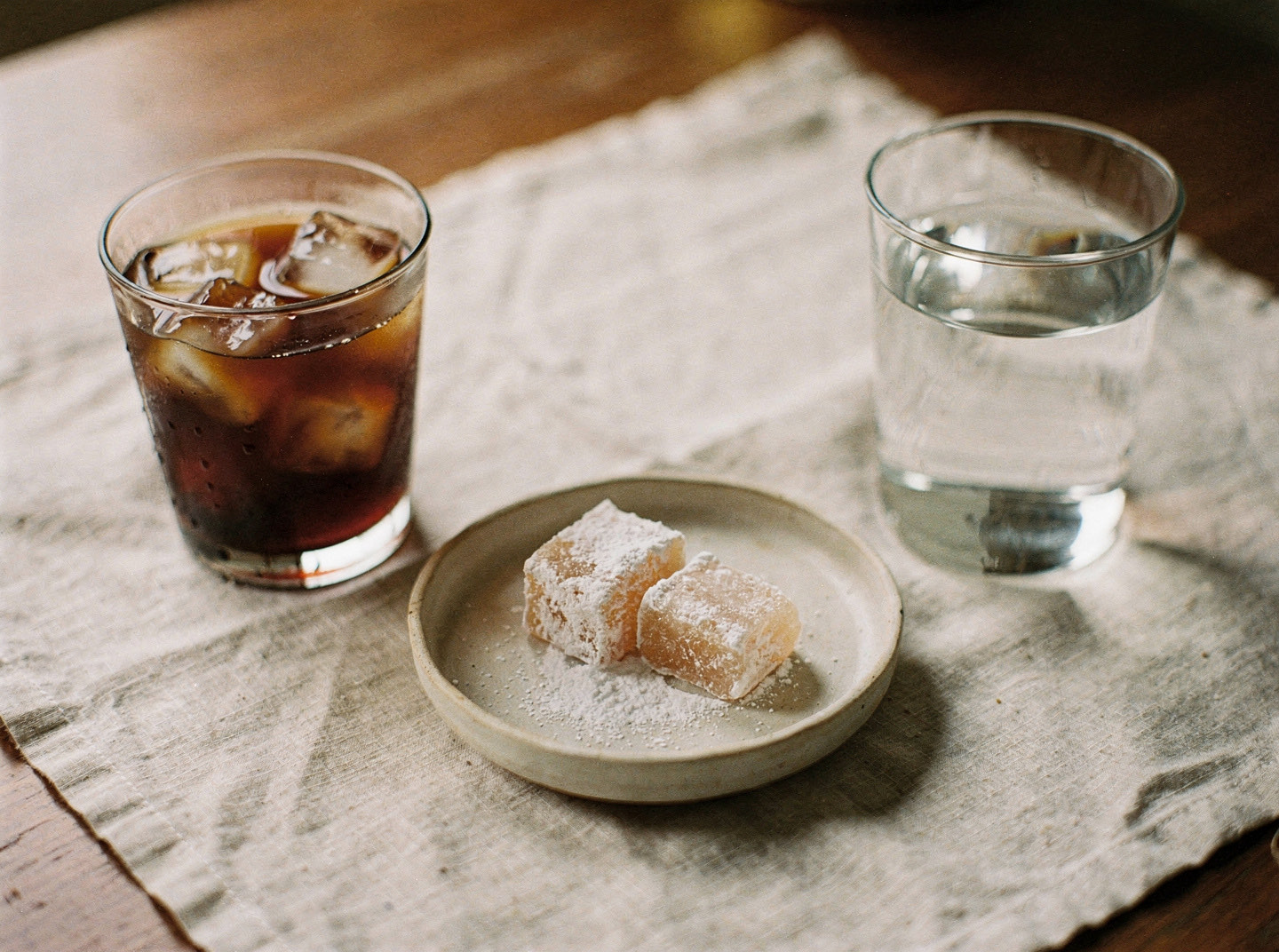
The traditional accompaniments work just as well cold as hot. A glass of plain water first, to clear the palate. A single piece of lokum or a square of dark chocolate alongside, never a whole plate of sweets, because the point is contrast rather than dessert.
What changes in summer is the pace. Hot Turkish coffee is a drink you finish in twenty minutes because it demands it. The iced version is a drink you can sit with for an hour, which makes it better company for a long afternoon than for a quick visit. If you would like the full version of the ritual, the etiquette around serving and drinking it is worth knowing.
For evenings, a measure of something stronger turns the same glass into a different occasion entirely, in the spirit of the coffee cocktails we make when the weather turns.
Can You Still Read the Cup?
Honestly, no. Not from a glass of iced coffee.
A reading depends on the grounds being hot and wet enough to run down the sides of an upturned cup and dry into shapes. Cold coffee over ice does not behave that way, and if you strained it, there is nothing left to read at all.
So if the cup matters to you, brew the classic hot one and take your time with it. The symbols that form in the cup are a tradition of attention more than prediction, and they need a small porcelain cup and a saucer to work at all. Save the ice for the second cup.
May your glass stay cold longer than the afternoon does.