
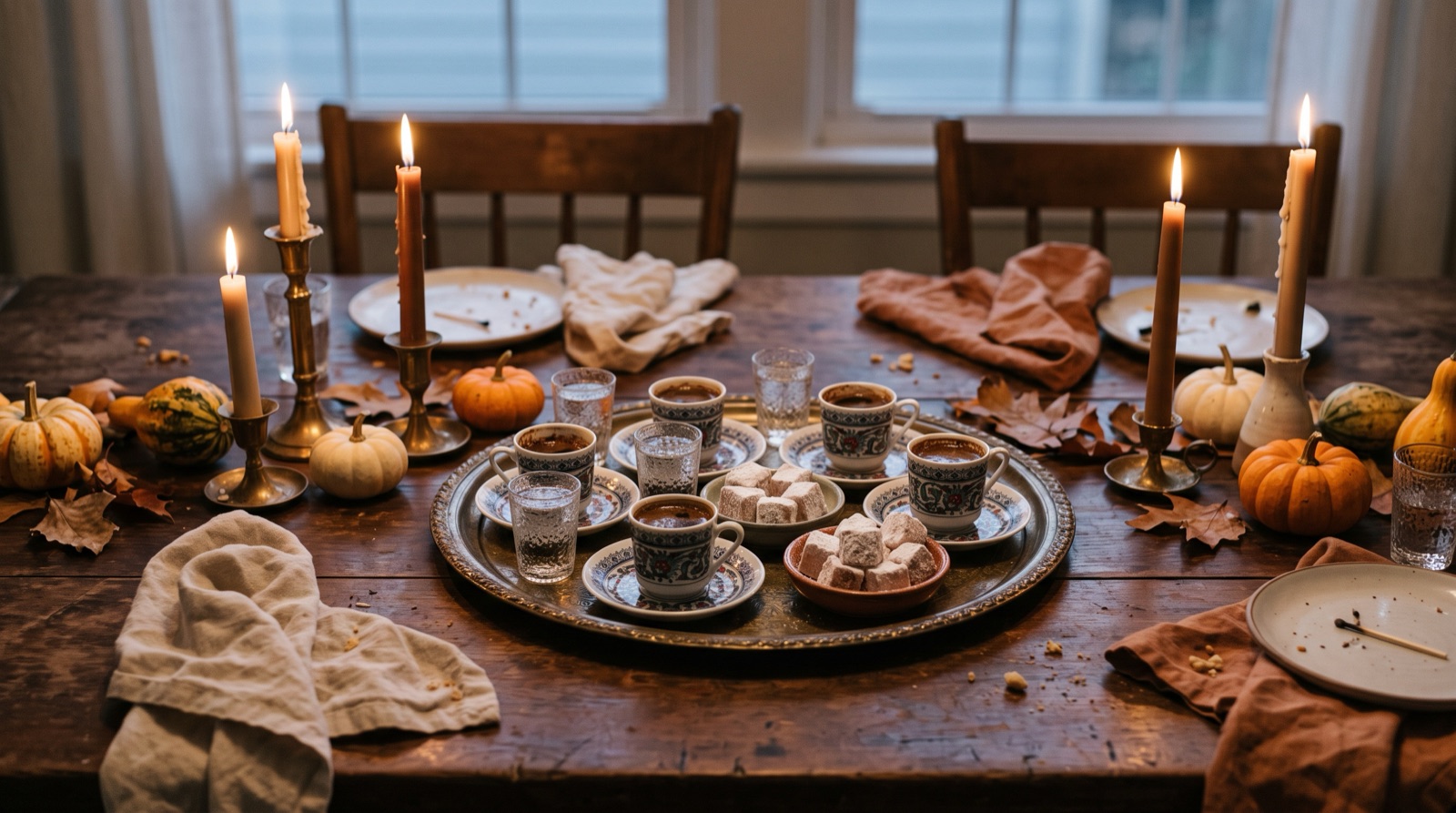
The plates have been cleared, the candles have burned low, and nobody wants to leave the table just yet. This is the moment for coffee. And if you want to give a holiday dinner an ending your guests will remember, few things beat a tray of small cups of Turkish coffee, each one crowned with foam.
Serving Turkish coffee to one person is a ritual. Serving it to eight is a small logistics puzzle. So how do you make Turkish coffee for a crowd, what belongs on the tray, and how do you keep it relaxed rather than frantic? Here is our guide for Thanksgiving and every gathering after it.
Why Turkish Coffee Makes the Perfect Finale
Turkish coffee is built for lingering. The cups are small, so even guests who rarely drink coffee after dinner can manage one. It is rich and strong enough to stand up to a big meal, and it arrives with a little ceremony: the foam, the glass of water, something sweet on the side.
There is a reason it feels so hospitable, too. In 2013, UNESCO added Turkish coffee culture and tradition to its list of the Intangible Cultural Heritage of Humanity, describing it as a symbol of hospitality, friendship, and refinement. A Turkish proverb puts it more warmly, saying that a cup of coffee shared together is remembered for forty years. That is a fine thing to offer at the end of a holiday meal.
If the drinking ritual itself is new to you, our guide to how to drink Turkish coffee and what goes well with it is a lovely primer.
Ask About Sugar Before You Brew
Here is the one rule that surprises first-time hosts: sugar goes into Turkish coffee while it brews, not afterward. There is no stirring a spoonful into the cup at the table. So before you head to the kitchen, ask each guest how they take it.
The traditional choices are simple:
- Sade: plain, with no sugar.
- Az şekerli: lightly sweet.
- Orta: medium, and a very popular choice.
- Şekerli: sweet.
Jot the answers down, because by the third guest you will have forgotten the first.
How to Brew for a Crowd
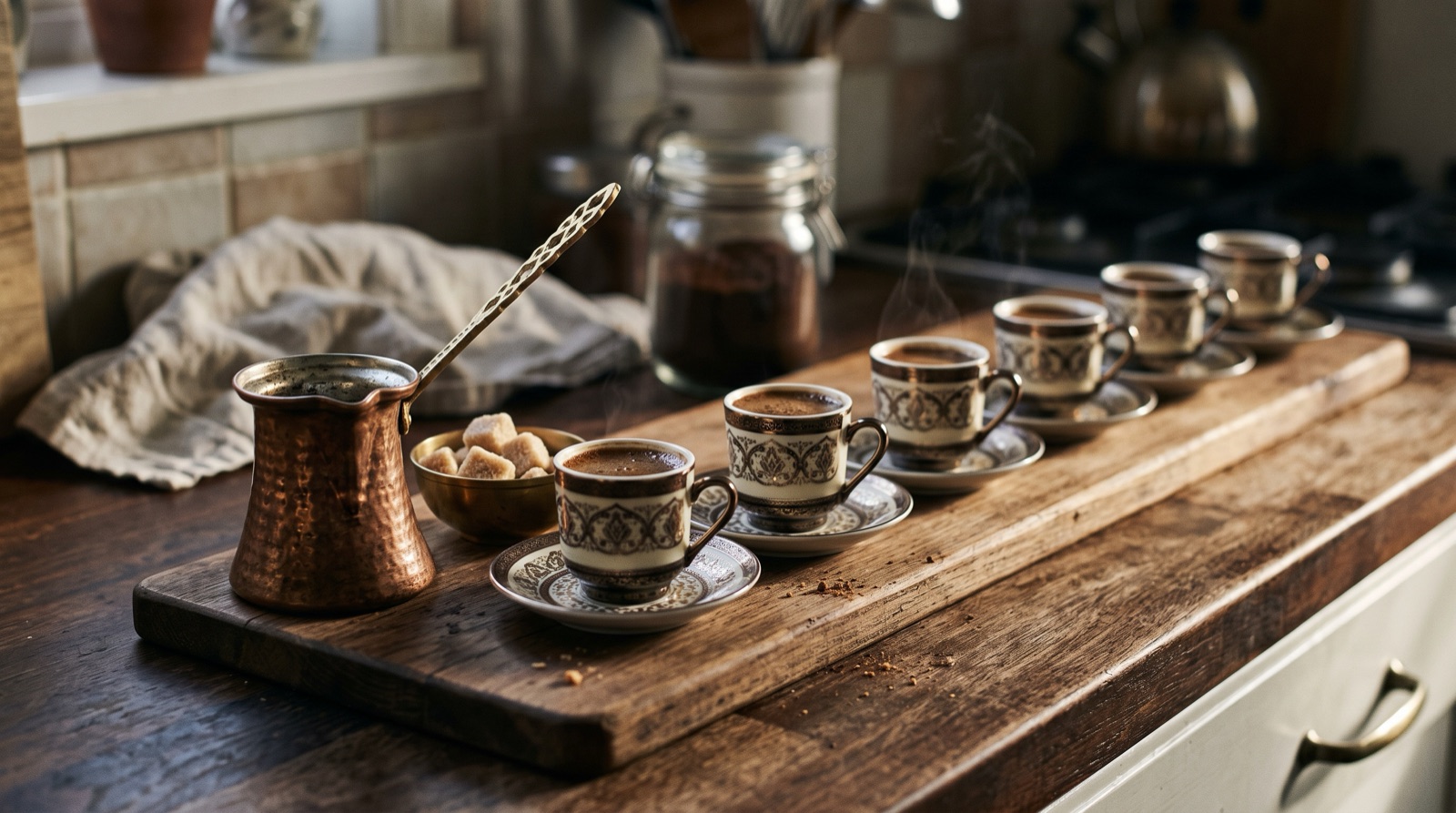
The secret is to brew in rounds rather than all at once. A typical cezve makes two to four cups well. Push past that and the foam suffers, because the coffee spreads too wide to build a proper crown.
Group your guests by sugar level and brew each group together: all the plain cups in one round, all the medium in the next. Use the serving cups to measure the water, one cup of cold water and one heaping teaspoon of coffee per guest, and keep the heat low.
As each round begins to rise, spoon a little foam into every cup before you pour, so nobody ends up with a bare cup. Then pour slowly, a little into each in turn, to share the foam evenly. If you do not own a cezve, a small saucepan works too, and our guide to making Turkish coffee without a cezve explains how.
A second pair of hands helps enormously. One person brews while another carries, and the kitchen becomes part of the party.
What to Put on the Tray
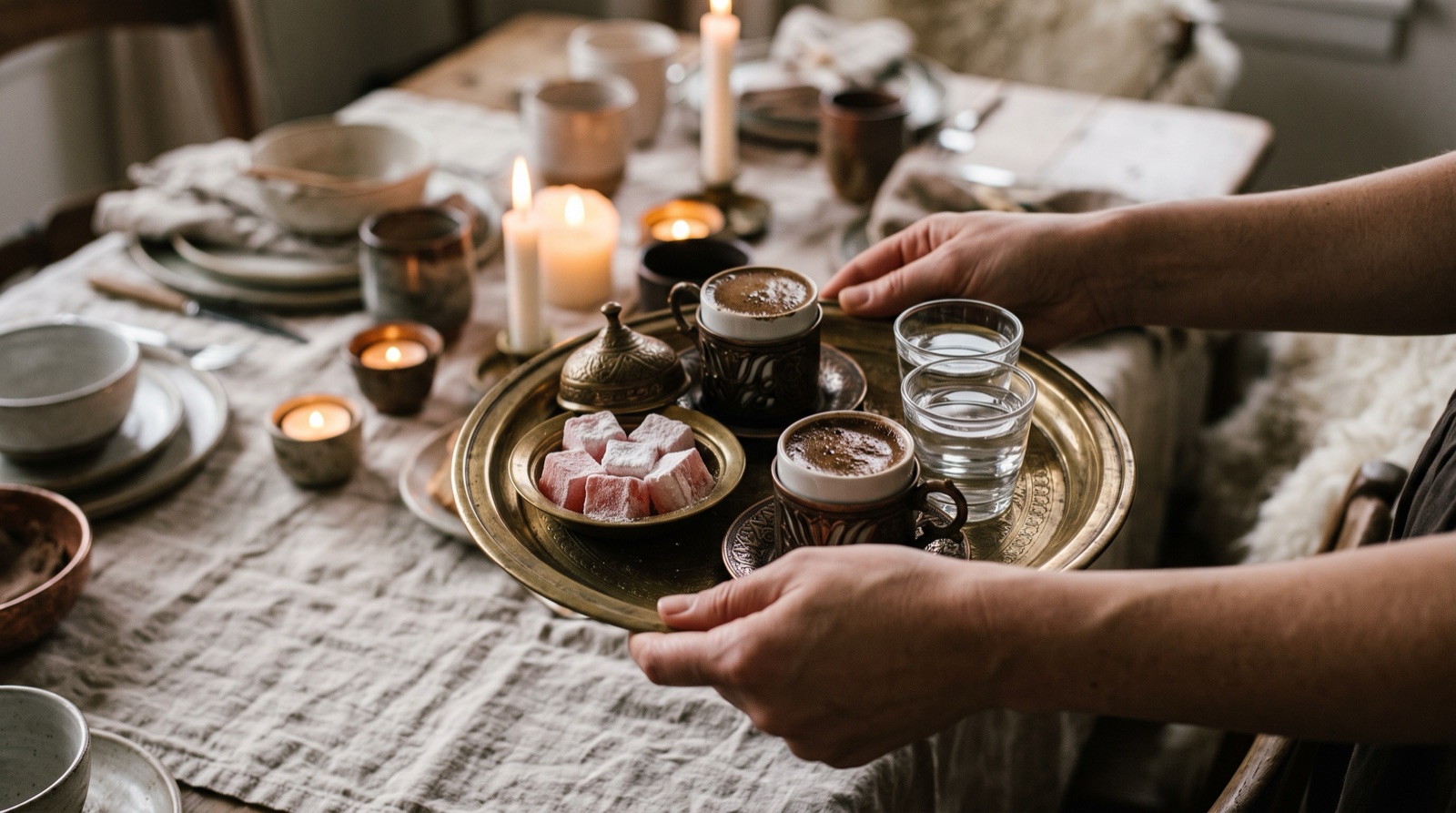
Three things belong on every Turkish coffee tray. The first is the coffee itself, in small cups on saucers. The second is a glass of water for each guest, traditionally sipped before the coffee to clear the palate. The third is something sweet, and a piece of lokum, or Turkish delight, is the classic partner, its softness balancing the coffee’s bitterness.
After a big holiday meal, keep the sweets small. One piece of lokum, a square of dark chocolate, or a little dish of candied nuts is plenty. The pie can wait.
If you want the coffee to echo the season, a pinch of cardamom or cinnamon in the pot brings the flavors of autumn baking into the cup. Our recipe for spiced Turkish coffee shows how to add spice without losing the foam.
Thoughtful Touches for Your Guests
Not everyone drinks coffee late in the evening, so have an alternative ready, such as a pot of herbal tea, and nobody will feel left out. If you can find it, menengiç makes a charming conversation piece. It is the caffeine-free brew from southeastern Turkey that we met on our journey through Turkish coffee across Anatolia.
Many Turkish hosts serve the eldest guest first, a small gesture of respect that suits any holiday table. And do not rush the moment. Turkish coffee is meant to be sipped slowly, between stories, until only the thick grounds remain.
And Then, the Cups Turn Over
Once the coffee is finished, something wonderful often happens at Turkish tables. Someone turns their cup upside down on the saucer, and the fortune-telling begins. It is a perfect after-dinner game, playful and social, and it keeps everyone at the table a little longer.
If you want to try it, keep things light and kind. Our guide to coffee reading etiquette explains how a cup is read with grace, so the evening ends with laughter rather than worry.
However you gather this season, may your table be full, your foam be thick, and your conversations last long after the last cup. Happy holidays, and afiyet olsun!