
There is a moment every year, usually in the first week of September, when the morning air sharpens just enough to change what you crave. The iced glasses of August suddenly feel out of season. What you want instead is something small, hot, and fragrant. This is the moment spiced Turkish coffee was made for.
Adding spice to the cezve is not a modern trick. It is one of the oldest ways coffee has been served across the region, and it turns an everyday cup into something that tastes unmistakably like autumn. So which spices work, how much should you use, and how do you keep that all-important foam? Keep reading to find out.
Why Spices Belong in the Cezve
Coffee and spice have traveled together for centuries. Across the Middle East, cardamom-scented coffee is a gesture of hospitality so familiar that many households would not serve a guest without it. In the Ottoman coffee tradition, the drink was always more ceremony than caffeine, and scent was a large part of that ceremony.
Turkish coffee is especially suited to spicing because of how it is brewed. The grounds never leave the cup, and the coffee is heated slowly with everything already in the pot. That slow, unfiltered method gives spices time to bloom in the water, so a small pinch carries much further than it would in a filter brew.
If you have never brewed the classic version, start with our guide to cooking classical Turkish coffee the authentic way. Once the base cup feels natural, spicing it is the easiest upgrade there is.
Which Spices Work Best?
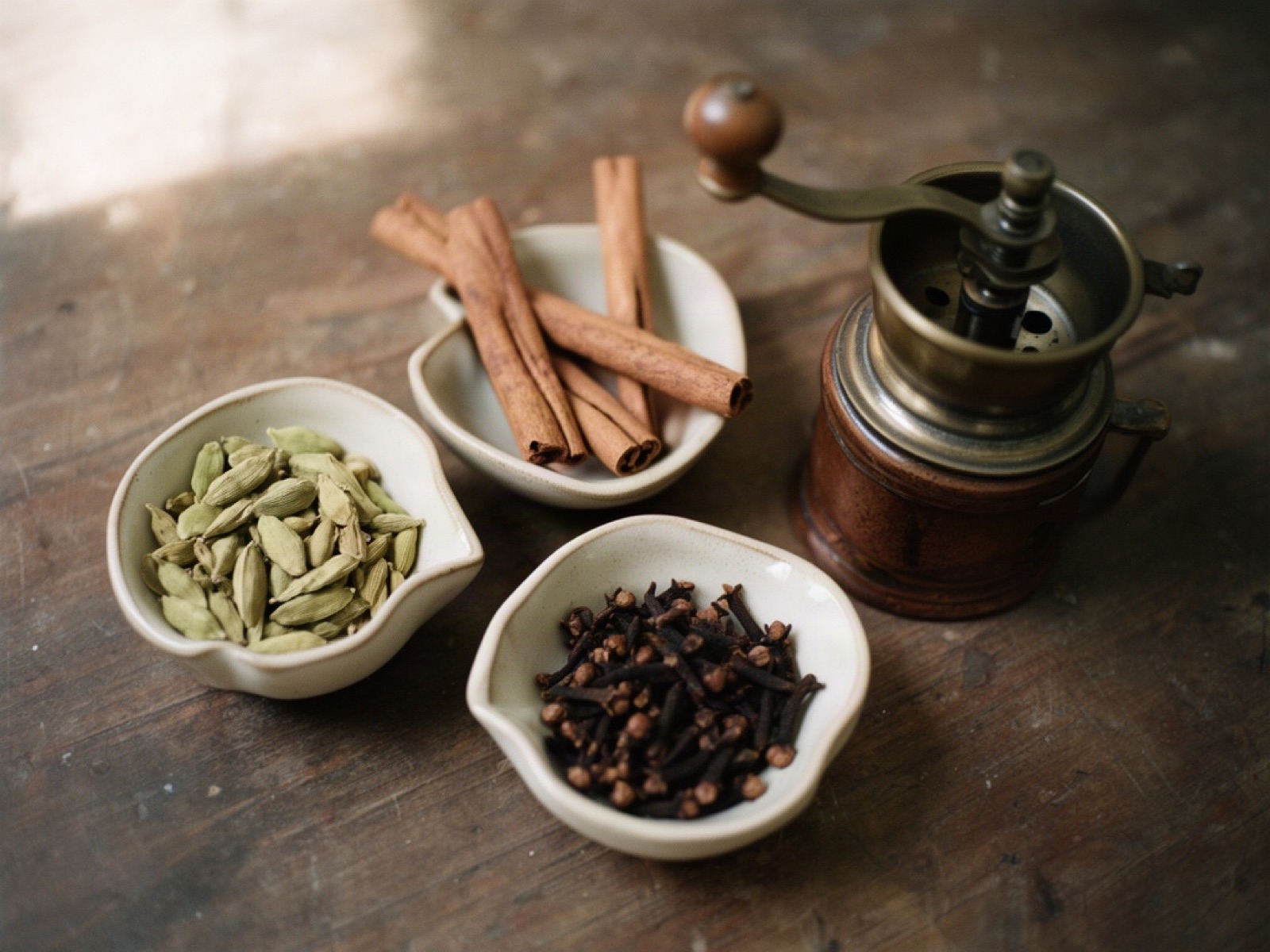
You only need three to cover the whole season, and you likely have all of them already.
- Cardamom is the classic. Floral, slightly sharp, and cooling at the edges, it is the spice most often paired with coffee across the Middle East. One lightly crushed pod per cup, or a small pinch of the ground seed, is enough.
- Cinnamon is the warmest choice and the most autumnal. Its sweetness plays against the natural bitterness of the roast. A few dashes of ground cinnamon stirred into the dry grounds is all it takes.
- Clove is intense and a little smoky. Use it the way you would use perfume: one whole clove in the cezve, removed before serving if you like your cup gentler.
Beyond these three, a whisper of nutmeg or dried ginger can round out a blend. Resist the urge to use everything at once. Two spices in one cup is a conversation. Five is a crowd.
How Do You Spice Without Losing the Foam?
The foam is the honor of the cup, and nothing sinks the heart like pouring a flat one. The good news is that spices, added correctly, do not harm the foam at all.
The rule is simple: everything goes in cold, before the cezve touches the heat. Add your water, coffee, sugar if you take it, and spice together, stir once, and then leave the spoon alone. Stirring after the coffee begins to warm is what breaks the forming foam, whether there is spice in the pot or not.
Ground spices behave best because they brew at the same rate as the coffee itself. Whole pods and cloves release more slowly, so crush them lightly first. If your foam still disappoints, spice is probably not the culprit; our post on why Turkish coffee loses its foam walks through the usual suspects, from stale grounds to a too-hot flame.
A Spiced Turkish Coffee Recipe for Autumn

This makes one cup, in the traditional demitasse size. Multiply as needed, but brew no more than two cups per cezve so the foam has room to build.
Ingredients:
- 1 Turkish coffee cup of cold water, measured with the cup you will serve in
- 1 heaping teaspoon of very finely ground Turkish coffee
- 1 cardamom pod, lightly crushed, or a small pinch of ground cardamom
- 2 dashes of ground cinnamon
- Sugar to taste, added now or never
Instructions:
- Add the water, coffee, spices, and sugar to the cezve while everything is still cold.
- Stir gently once, then place the cezve over the lowest heat you can manage.
- Wait without stirring. As the coffee warms, a ring of foam will rise at the edges.
- Just before the boil, when the foam swells toward the rim, lift the cezve off the heat.
- Spoon a little foam into the cup, return the cezve for one more short rise, then pour slowly down the side of the cup.
- Let the cup rest for a minute so the grounds settle, and serve with a glass of water.
What to Serve Alongside
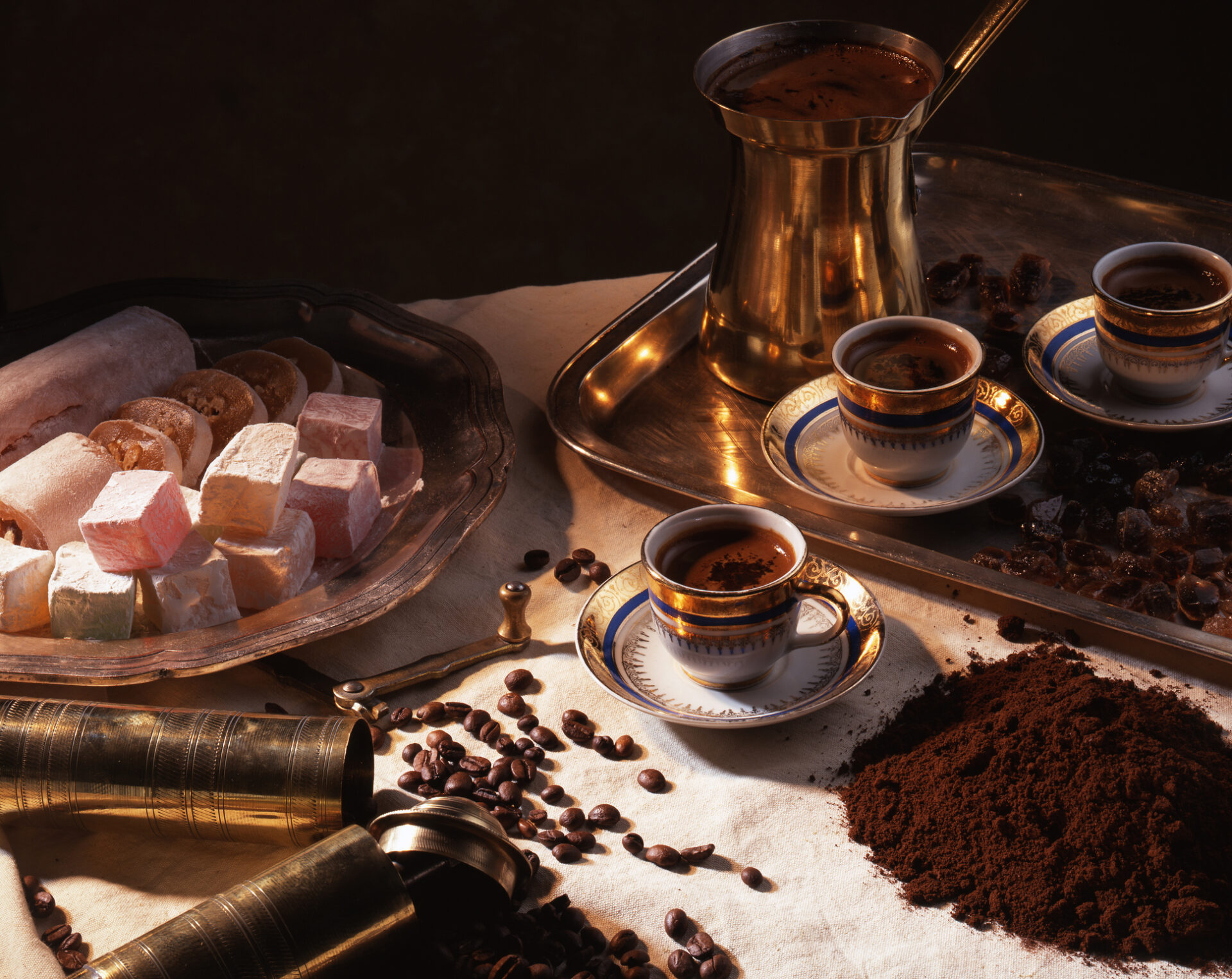
A spiced cup asks for something sweet but restrained. A square of dark chocolate, a single piece of Turkish delight, or a plain butter cookie will not fight the cardamom. In the Turkish tradition, the water is not optional: a sip first clears the palate so the first taste of coffee arrives complete.
If you have been building a dedicated spot for your ritual at home, a small dish of whole spices makes a lovely addition to the tray. We wrote about assembling a Turkish coffee corner at home if you want the full setup, from cezve to cups.
Making It Your Own
Once the basic proportions feel comfortable, the blend becomes a signature. Some households lean entirely on cardamom. Some add cinnamon only after the first cold morning. Some save clove for guests, because its scent announces that something special is happening in the kitchen.
That is the real pleasure of spiced Turkish coffee: it is the same beloved cup, tilted a few degrees toward the season. And when the last sip is gone and the grounds have settled into their shapes, you can always turn the cup over and see what the symbols have to say.
May your foam be thick and your kitchen smell like September. We wish you a pleasant brew!