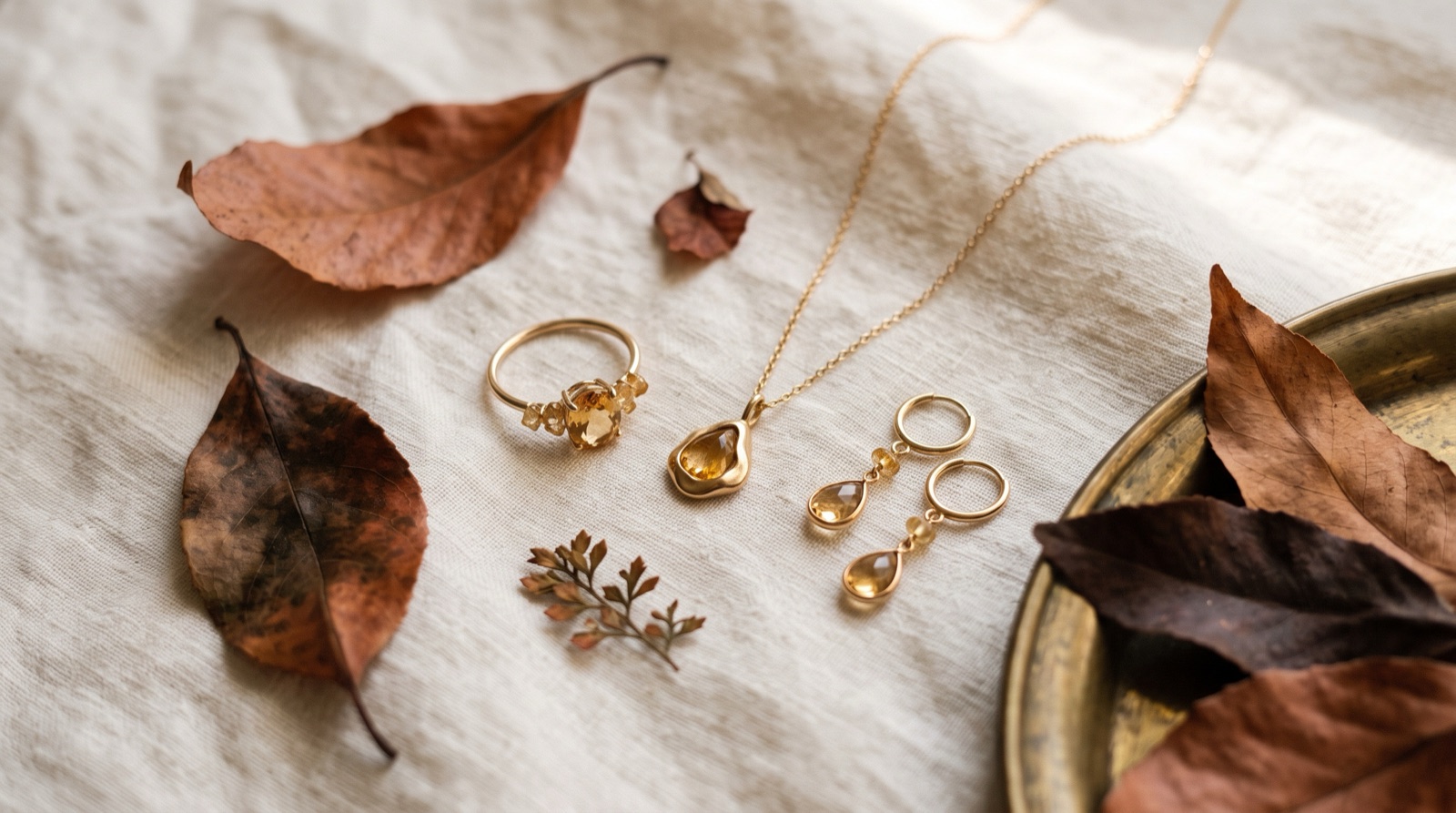
If you were born in November, you were dealt a generous hand. While most months have a single birthstone, November has two, and they share a palette that could not suit the season better: the honey, amber, and marigold tones of the last golden afternoons before winter.
Topaz and citrine are often confused, and sometimes on purpose. They can look remarkably alike, yet they are entirely different minerals with different histories, prices, and care needs. So what are the November birthstones, how do you tell them apart, and how should you wear them? Here is everything worth knowing.
Why Does November Have Two Birthstones?
The modern birthstone list most of us know is an American creation. In 1912, the National Association of Jewelers agreed on an official stone for every month, giving shoppers and jewelers a shared reference. Topaz was November’s stone on that original list.
Citrine joined it in 1952, when the list was revised to add more choices. Sources disagree on exactly which trade body made the change, but they agree on the year. The addition made practical sense. Citrine offers a similar warm color at a gentler price, which made a November birthstone far easier to give.
Topaz: The Original November Stone
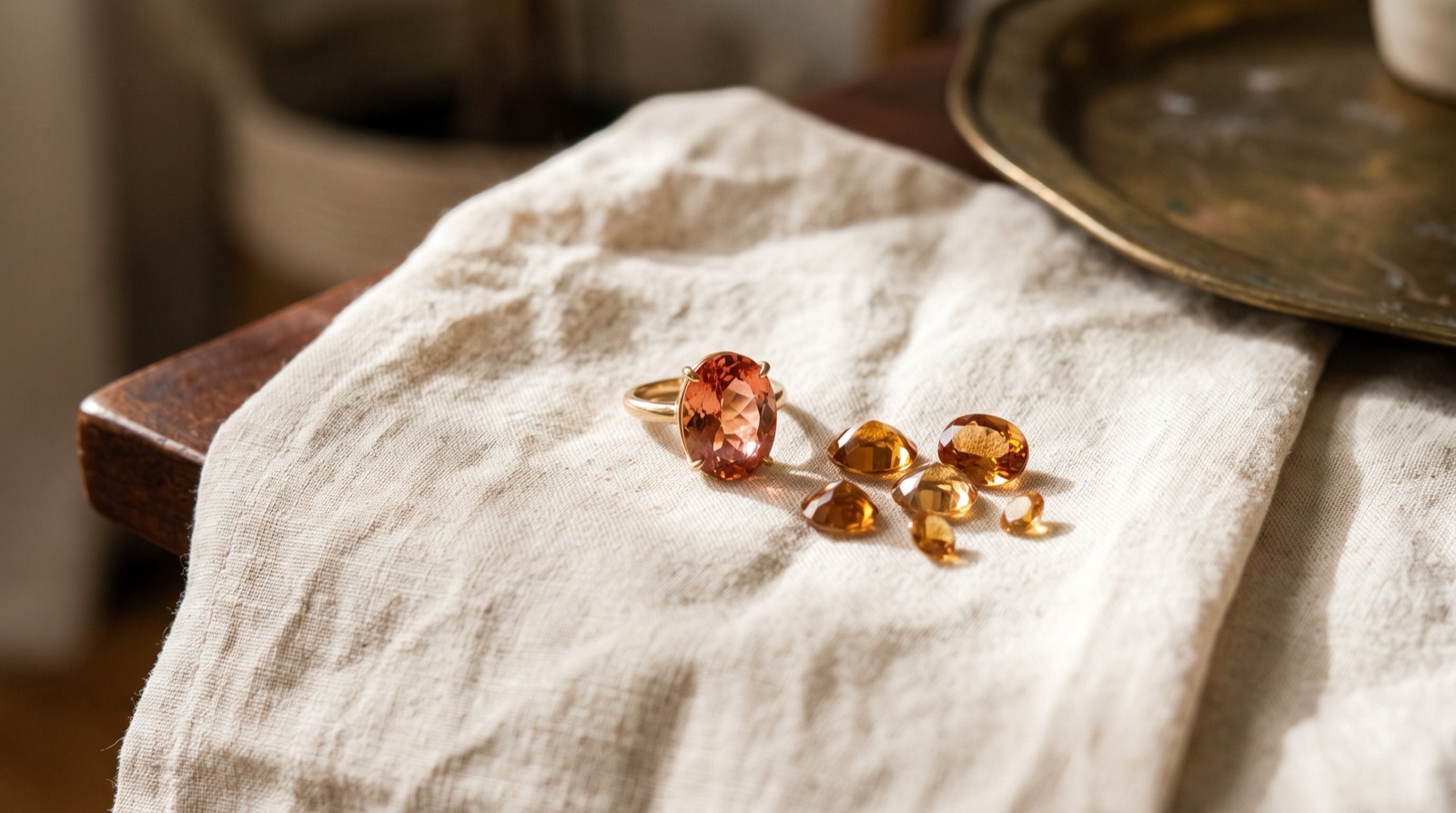
Topaz is a mineral in its own right, and a hard one, rating 8 on the Mohs scale. That makes it durable enough for rings, which take more knocks than any other piece of jewelry.
The topaz most associated with November is warm: golden, sherry, peach, and the deep orange-pink known as imperial topaz. Brazil is the world’s largest producer of topaz. The stone also comes in other colors, and you have almost certainly seen bright blue topaz in jewelry stores. That vivid blue is the result of treatment: pale or colorless topaz is irradiated and heated to produce it, a practice that has supplied the market since the 1970s. It is entirely legitimate, but it is worth knowing what you are buying.
One practical note. Topaz has what gemologists call cleavage, meaning a sharp knock from the wrong direction can split the stone. A protective setting, such as a bezel that wraps around the edge, is a sensible choice for a ring you plan to wear every day.
Citrine: The Sunny Alternative
Citrine is a variety of quartz, the same mineral family as February’s amethyst. It rates 7 on the Mohs scale, a little softer than topaz but still sturdy enough for everyday wear.
Its color runs from pale lemon to a deep, reddish orange-brown. Natural citrine is relatively uncommon, and much of the citrine sold today is amethyst or smoky quartz that has been heat-treated to turn it golden. This, too, is an accepted practice.
Because quartz is abundant, citrine is generous with size. A large citrine cocktail ring costs a fraction of a topaz of similar size, which makes it a lovely choice if you want one bold piece rather than several small ones, a principle we explored in our look at this season’s jewelry trends.
How to Tell Topaz and Citrine Apart
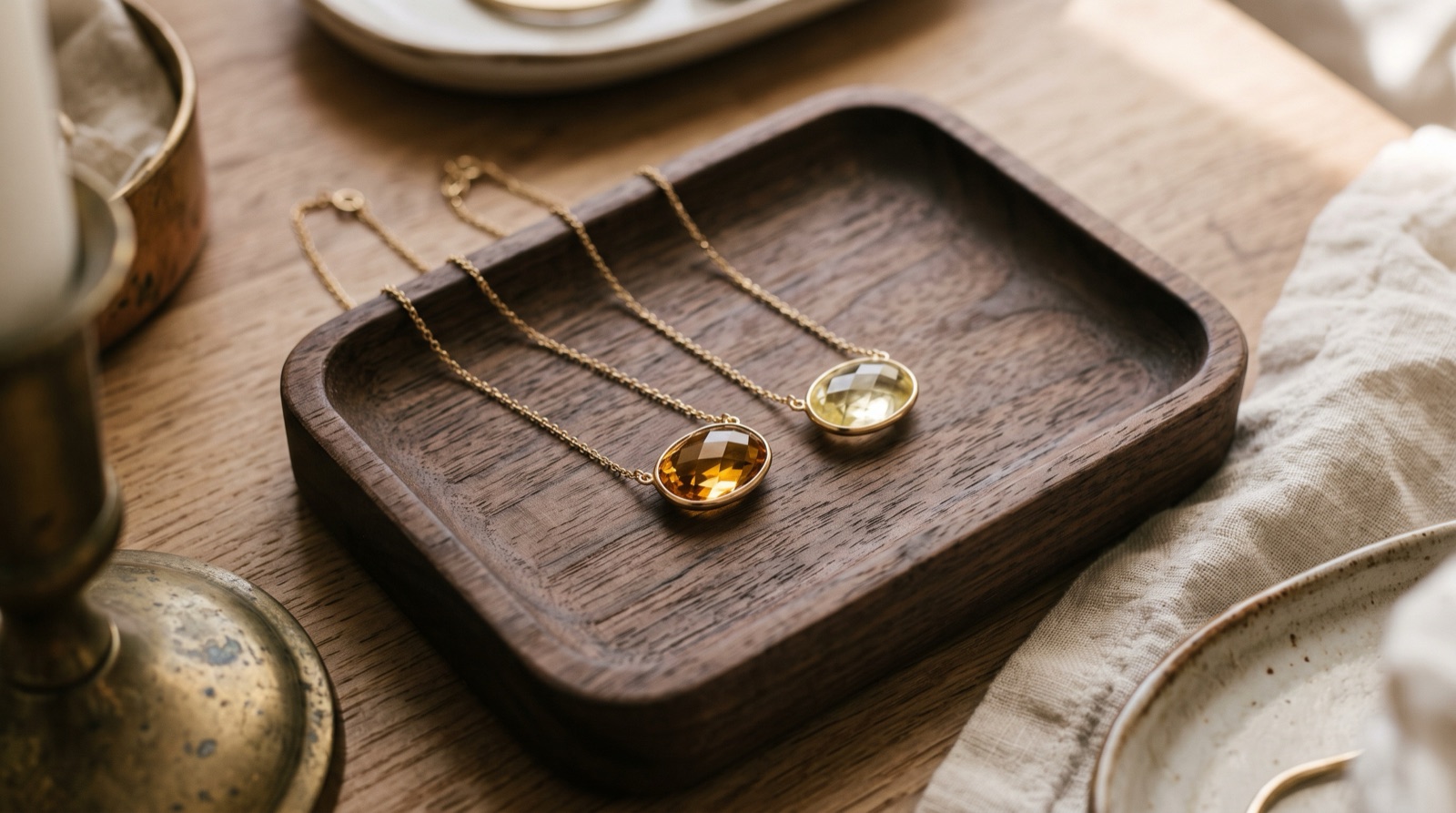
Here is the honest answer: by eye alone, you often can’t. A golden topaz and a deep citrine can look nearly identical, and the trade has a long history of blurring the line. Names like “Brazilian topaz” have been used for citrine, which is misleading, since citrine is not topaz at all.
A few clues help. Topaz is a denser stone, so it feels a little heavier in the hand than a citrine of the same size. Price is another hint: a large, inexpensive “topaz” in a warm yellow deserves a polite question. The reliable way to know is a gemological test, and a reputable jeweler should be happy to tell you exactly what a stone is and whether it has been treated.
How to Wear November’s Golden Tones
Warm stones love warm metals. Yellow and rose gold flatter both topaz and citrine, deepening their honey tones and making the whole piece glow. If you live in silver, choose a pale lemon citrine or a light sherry topaz, which hold their own beside a cool metal.
These stones also suit the season’s wardrobe. Against camel, chocolate brown, cream, and olive, a golden stone looks as if it belonged to the outfit all along. For layering, a single topaz pendant sits nicely with two finer chains, an approach we covered in our guide to jewelry layering. And if you like to dress by the stars, our outfit ideas for your zodiac sign might suggest a stone to match.
November’s stones make an especially thoughtful birthday gift. Those born in the month are Scorpios or Sagittarians, and if you are shopping for a Scorpio, our guide to Scorpio season might add a little meaning to the card you tuck in with it.
Caring for Topaz and Citrine
Both stones are easy to live with. Warm water, a drop of mild soap, and a soft brush are all you need, followed by a rinse and a gentle dry. Store each piece on its own so harder stones and metals do not scratch it, and take rings off before gardening, cleaning, or the gym.
A few extra cautions are worth following. Keep topaz away from high heat and sudden temperature changes, and skip ultrasonic and steam cleaners unless your jeweler confirms they are safe for your particular piece. Treated stones in particular deserve a gentle hand.
Whether you choose the classic depth of topaz or the sunny warmth of citrine, November’s birthstones carry a little autumn light into the darkest weeks of the year. We wish every November birthday a golden one!