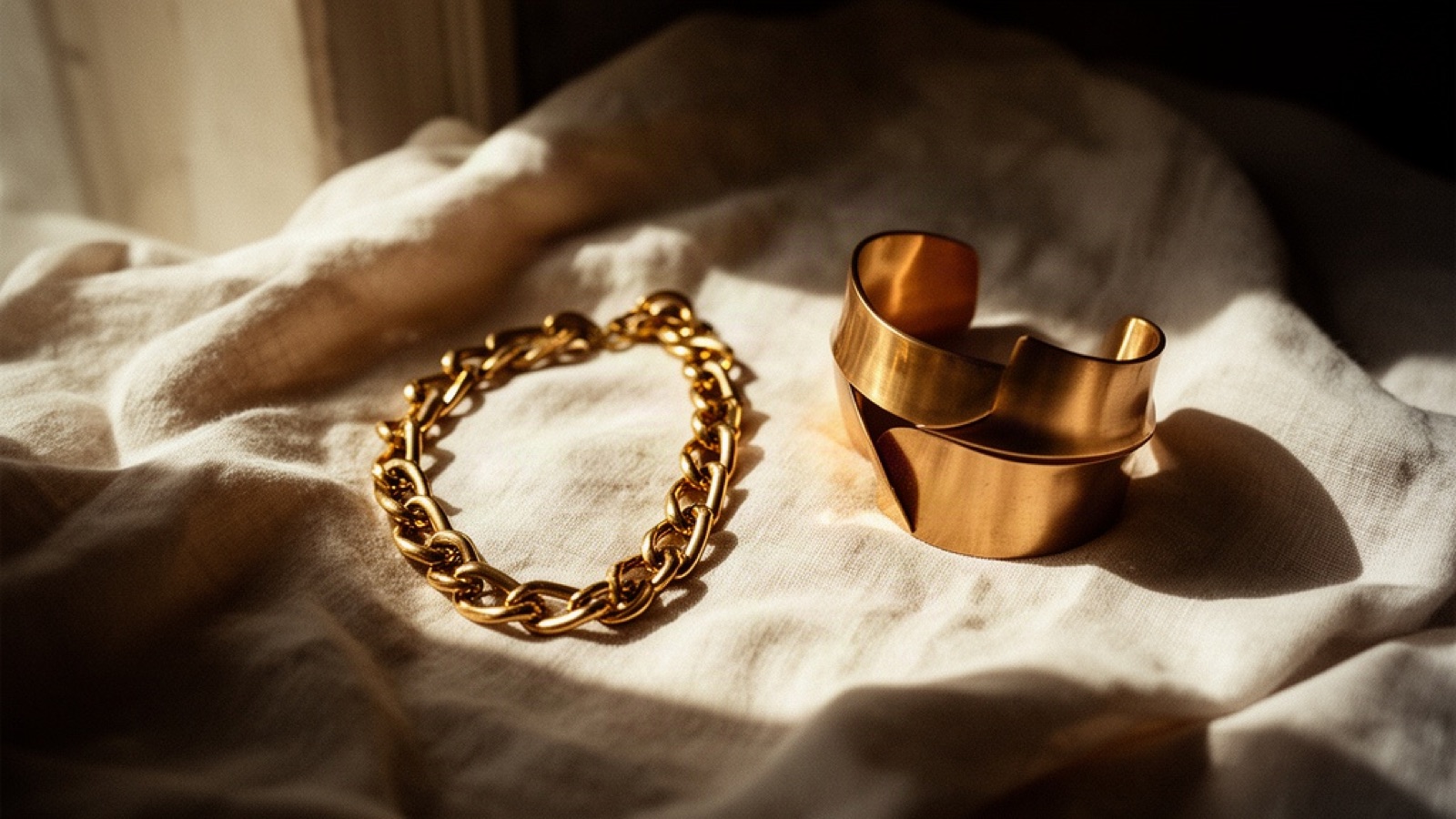
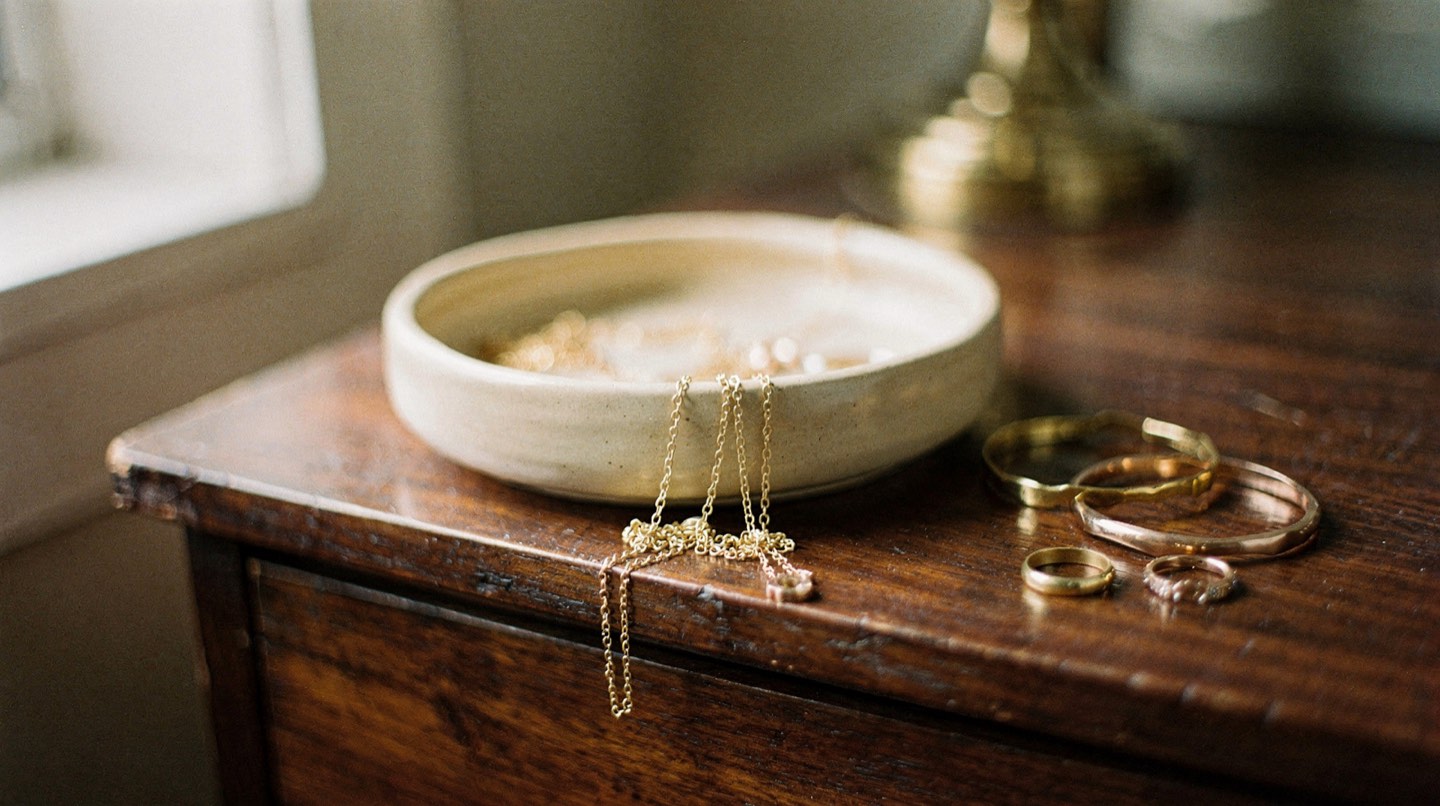
For years the advice was to take one thing off before leaving the house. That advice has quietly been withdrawn.
After a long stretch of minimalism, layered and stacked jewelry is back everywhere, and summer is when it makes the most sense: bare arms, open necklines, and skin already warm enough to carry metal. The trick is that a good stack looks accidental and almost never is. So how do you build one that reads considered rather than like you emptied the dish by the door?
Why Everything Is Stacked Again
The shift is partly a reaction. A decade of one fine chain and a single stud was elegant and also, eventually, a little anonymous. Stacking gives jewelry back its personality, because no two people assemble the same pile.
It has also changed when jewelry gets decided. It used to be the finishing touch, added last, almost an afterthought. Now people build the stack first and dress around it, which is why sculptural shapes and chunkier pieces have come back alongside the delicate ones. Bangles in particular have become one of the strongest pieces of the season.
The useful part of the trend is that it rewards what you already own. Most people have more jewelry than they wear, and layering is largely a matter of putting three things on at once instead of choosing between them.
Start With an Anchor Piece
Every stack that works has one piece doing the most talking, and everything else arranged around it.
Pick that piece first. It might be a pendant that means something, a signet, a heavier cuff, or a charm you never take off. Choose by attachment rather than by value, since the anchor is the reason the set reads as yours rather than as a look someone else assembled.
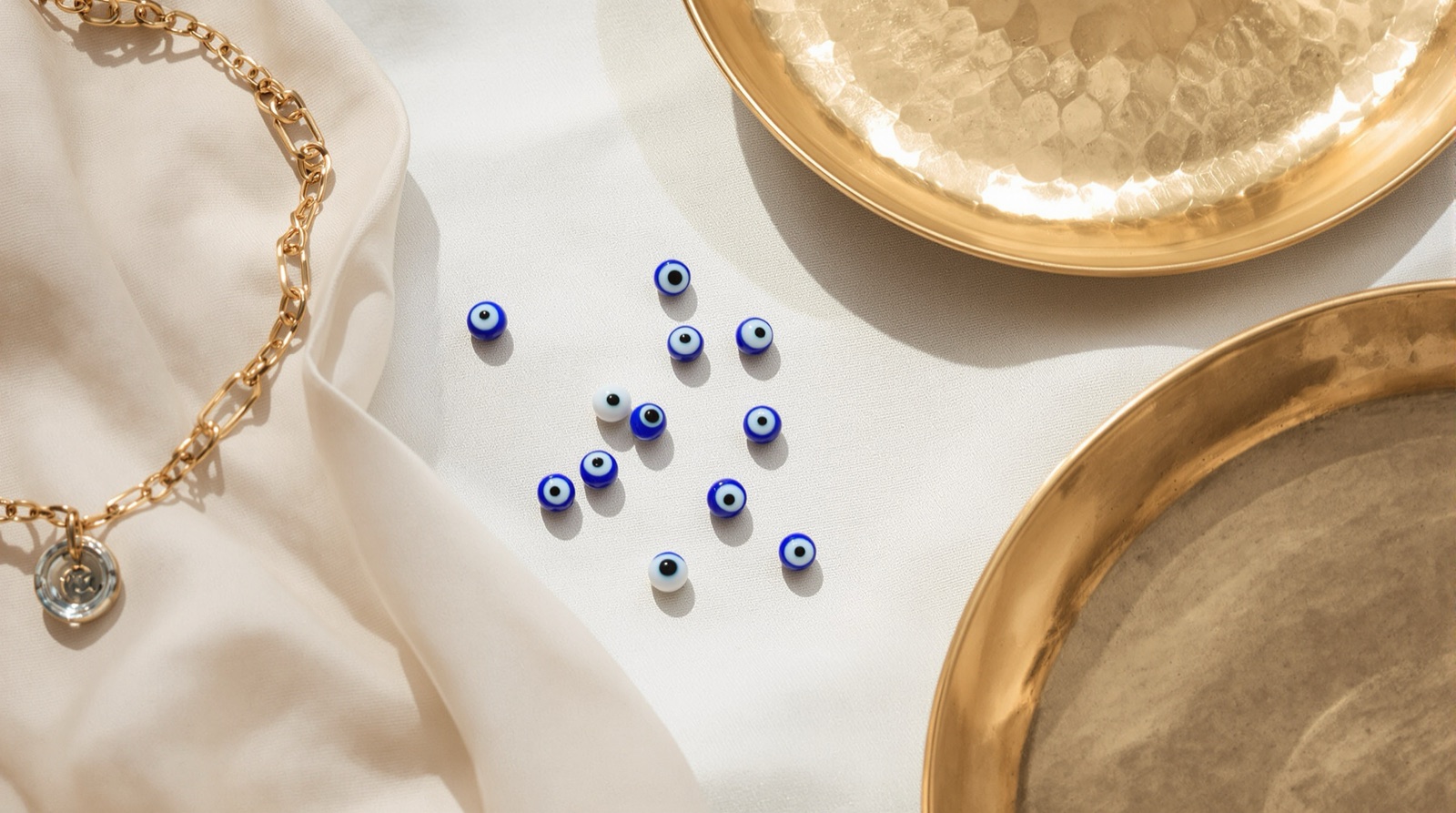
A charm with actual meaning behind it is a particularly good anchor, which is part of why the blue glass nazar boncuğu has become such a common centerpiece. It gives the eye somewhere to land and gives you something to say when someone asks.
Necklaces: Let the Lengths Do the Work
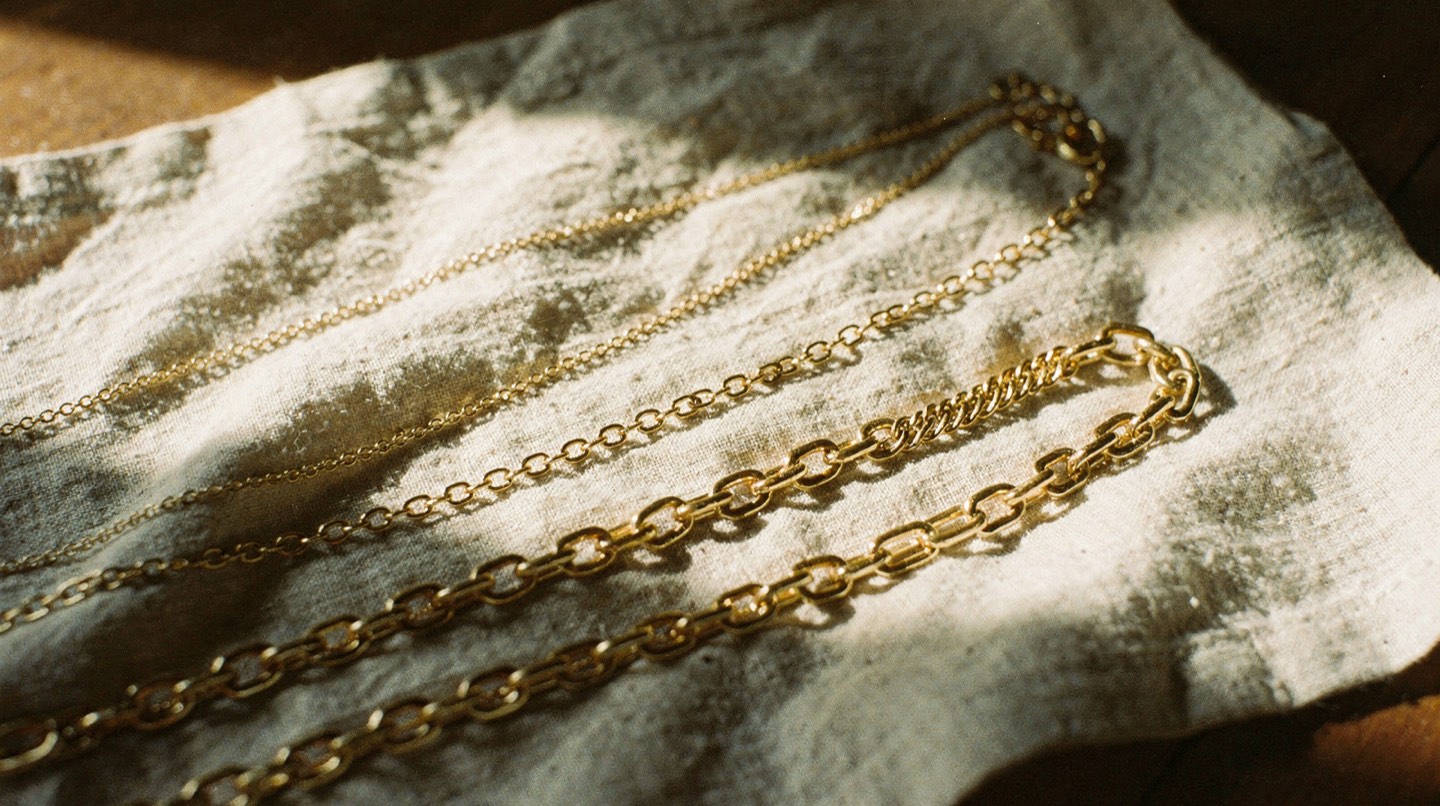
The single most common mistake is layering chains that are nearly the same length. They tangle all day, they read as one confused necklace, and the effect is mess rather than depth.
Leave real space between them. A rough rule that holds up: about 5 cm between each layer, so a 40 cm choker, a 45 cm chain, and a 55 cm pendant sit in three distinct places rather than fighting for the same one.
Then vary the weight. Three identical fine chains at three lengths still looks thin. Two fine plus one with visible texture, a curb link or a beaded strand, gives the set some rhythm. Three is the comfortable number for most necklines; four works with a deeper V, and five is a commitment.
Two practical notes. Clasp the shortest chain last, and it will sit on top where it belongs. And if two chains insist on twisting, a small layering clasp that joins them behind the neck solves it permanently.
Rings: Odd Numbers, One Loud One
Rings are the easiest place to start, because nothing has to match and nothing is visible from across a room.
Odd numbers tend to sit better than even ones. Three or five spread across both hands looks deliberate; four in two neat pairs looks like a set you were given. Mix widths rather than repeating one: a couple of slim bands, something wider, and one piece with actual presence.
Leave gaps. A finger with a ring at the base and another above the knuckle reads as styling. Every finger fully occupied reads as a display case. And keep at least one hand quieter than the other, since your hands move constantly and the eye needs somewhere to rest.
A plain bezel-set band is the most useful piece you can own here. It is quiet enough to sit between busier rings and stop them clashing, which makes it the punctuation in the sentence.
Bracelets and Bangles: Summer’s Workhorse
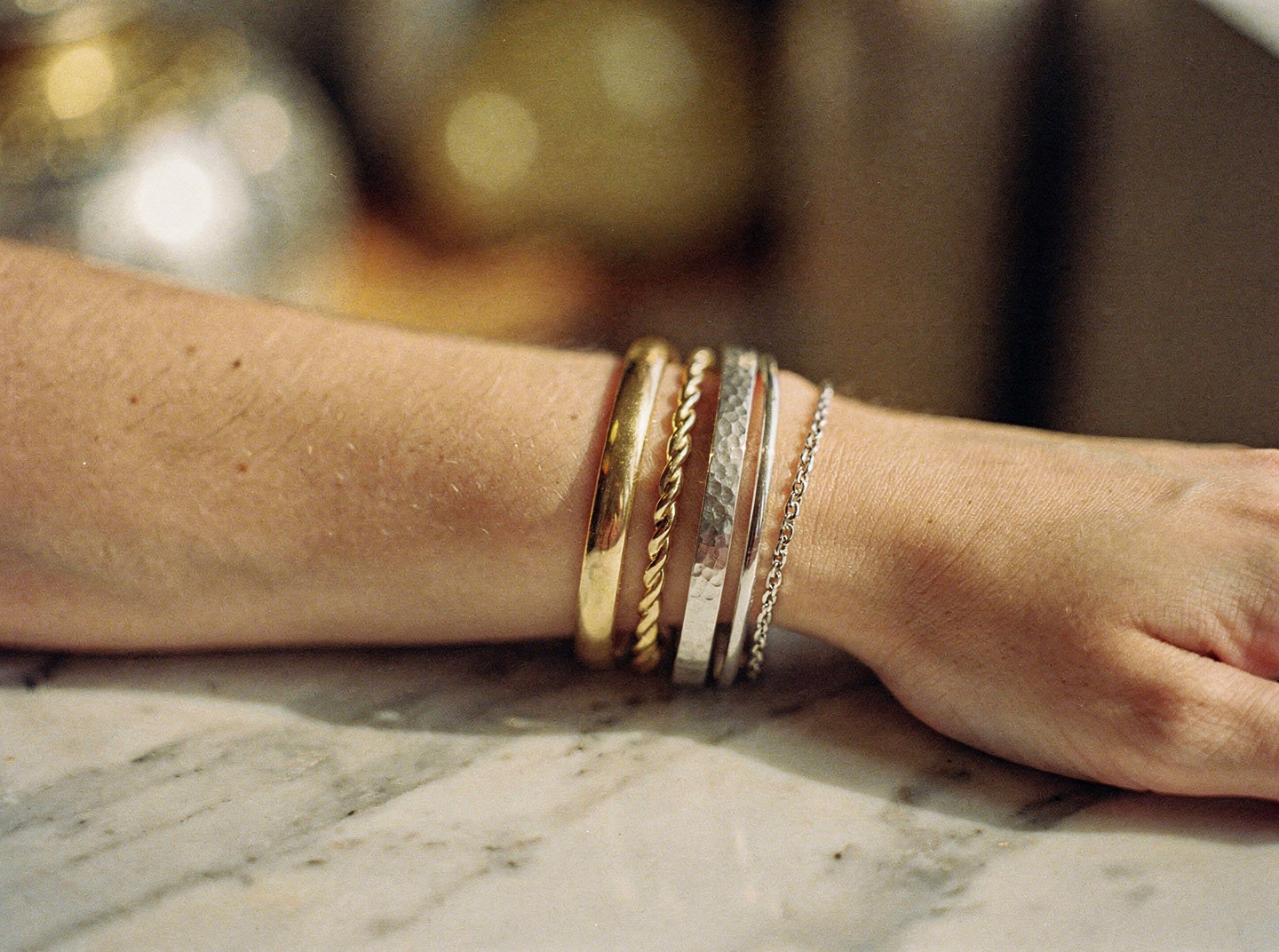
This is where summer stacking really lives, because it is the only jewelry a short sleeve shows off properly.
Bangles want contrast more than any other category. A hammered or textured bangle next to a sleek polished one, or a fine chain bracelet threaded between two rigid ones, keeps the stack from reading as a single cuff. A beaded strand in among the metal adds color and, usefully, stops the whole thing from clinking against a desk all afternoon.
Build up your arm rather than crowding your wrist. Three or four pieces sitting slightly apart looks better than seven jammed at the wrist bone, and it moves better too.
Consider your watch part of the stack if you wear one. It is usually the heaviest thing on that arm, so treat it as the anchor and put the lighter pieces on the other side.
Mixing Metals Without It Looking Accidental
The old rule against mixing gold and silver is gone, and good riddance. It was never about taste; it was about matching sets.
That said, mixed metals work best when the mix is clearly on purpose. The reliable method is to let one metal lead and the other appear at least twice. Mostly gold with two silver pieces looks intentional. A precise fifty-fifty split usually looks like you could not decide.
Repetition is what sells it. If there is silver at your wrist, put silver somewhere else too, at an ear or on the opposite hand, so the eye reads it as a decision. The same principle carries into how you build an outfit around the pieces, whether you are working from the quiet end of the wardrobe or dressing to your sign.
Knowing When to Stop
The honest test is whether you can name what each piece is doing. Anchor, contrast, texture, color, something you never take off. If a piece has no answer, it is padding, and it is what makes a stack look cluttered.
The other test is movement. Put everything on, then use your hands for five minutes. Anything that catches on a sleeve, spins around your wrist, or has to be constantly readjusted is not going to survive a real day.
A little care goes a long way in summer. Sunscreen and perfume dull plating faster than anything else, so jewelry goes on last, after both. Take stacks off before swimming, since chlorine and salt are hard on plating and on any strung pieces. Store them so they are not knocking against each other in a drawer, which is the main cause of the fine scratching that makes gold look tired. The rest of what completes a summer look follows the same logic, as does keeping the rest of your routine simple when the jewelry is doing the talking.
Start with the one piece you love and build outward. Now you can wear all of it at once, with our blessing.