If you love tarot, there is a good chance you have come across a smaller, plainer-looking deck and wondered what it was. Thirty-six cards with simple pictures: a ship, a house, a fox, a bouquet of flowers. That is the Lenormand, and it reads very differently from anything in the tarot.
Where tarot invites you into layered symbolism and long reflection, Lenormand is direct, practical, and almost conversational. Many readers find it refreshingly quick to learn. So what are Lenormand cards, where did they come from, and how do you read them? Let’s shuffle up.
Where Do Lenormand Cards Come From?
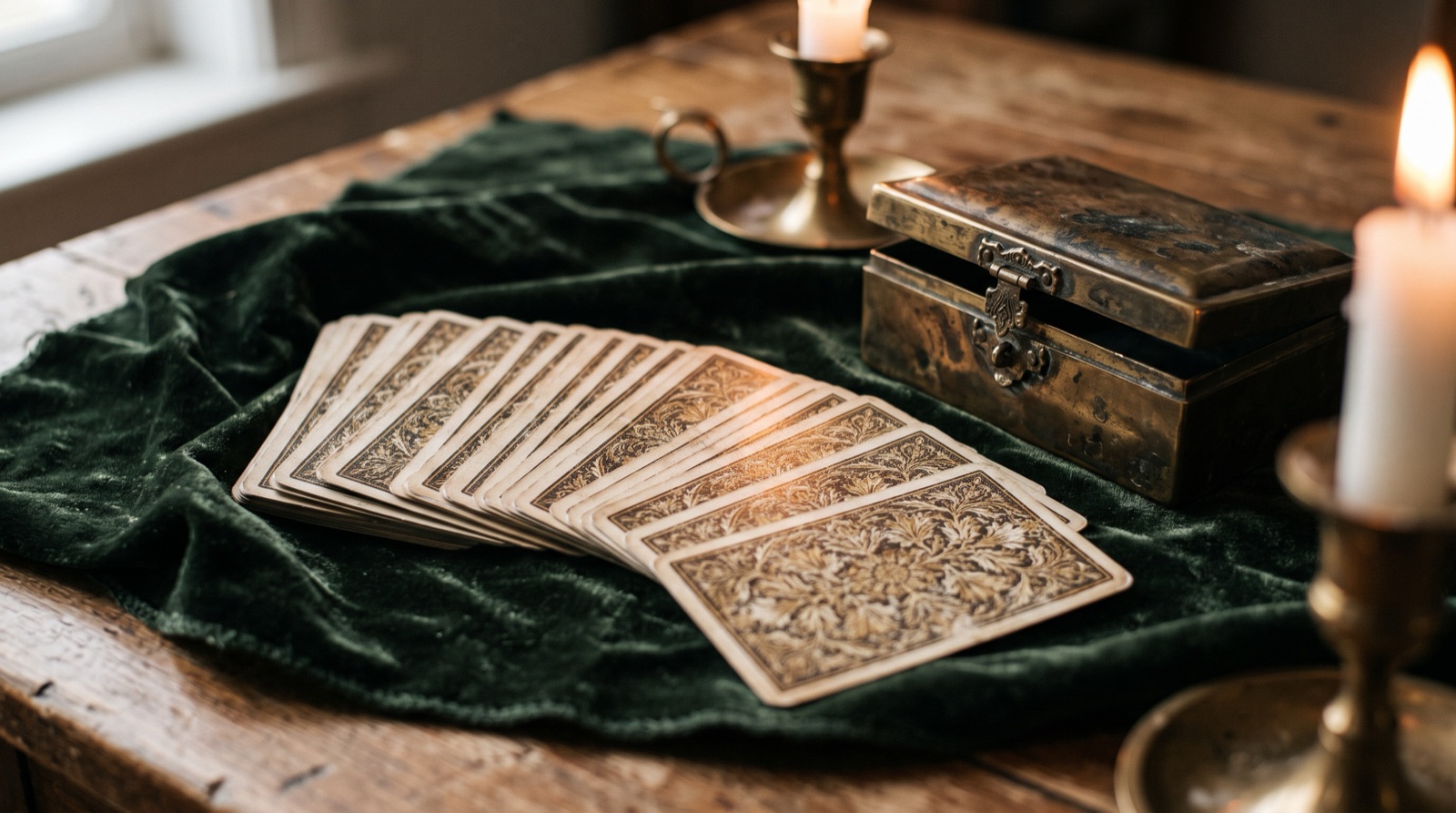
The deck is named after Marie Anne Lenormand, a celebrated French fortune-teller who lived from 1772 to 1843. But here is the twist: she did not design this deck, and there is no evidence she ever used it.
The 36-card structure actually comes from a German parlor game, Das Spiel der Hoffnung, or The Game of Hope, designed by Johann Kaspar Hechtel of Nuremberg and published around 1799. It was a game of chance, and the winner was the first to reach card 35, the Anchor, the symbol of hope.
After Lenormand’s death, publishers borrowed her famous name to sell fortune-telling decks, and the 36-card game found new life as what is now often called the Petit Lenormand. Over time the card names, their order, and their meanings settled into the standard deck readers use today.
The 36 Cards at a Glance
Every Lenormand card shows a single everyday image, and most decks also carry a small playing card inset in one corner, an echo of the deck’s game origins and a link to fortune-telling with ordinary playing cards. Here are all 36, with a short keyword for each:
- Rider: news, a visitor
- Clover: a small piece of luck
- Ship: travel, distance
- House: home, family
- Tree: roots, slow growth
- Clouds: confusion, uncertainty
- Snake: a winding path, complication
- Coffin: an ending
- Bouquet: a gift, a pleasant surprise
- Scythe: a sudden cut, a quick decision
- Whip: conflict, repetition
- Birds: chatter, conversation, nerves
- Child: a new beginning, something small
- Fox: cleverness, caution
- Bear: strength, resources
- Stars: hope, guidance
- Stork: change, moving forward
- Dog: friendship, loyalty
- Tower: institutions, solitude
- Garden: social life, the public
- Mountain: an obstacle, a delay
- Crossroads: a choice
- Mice: worry, things wearing away
- Heart: love
- Ring: commitment, agreements
- Book: secrets, learning
- Letter: a message, documents
- Gentleman: a person card
- Lady: a person card
- Lilies: peace, maturity
- Sun: success, warmth
- Moon: recognition, emotions
- Key: an answer, certainty
- Fish: money, abundance
- Anchor: stability, work
- Cross: a burden, duty
The Gentleman and Lady cards traditionally represent the person being read for, or someone important to them. Many modern readers simply choose whichever of the two they prefer to stand for themselves.
These keywords are a starting point, not a rulebook. Meanings vary a little between traditions and readers, and you will develop your own feel for each card with practice.
How Is Lenormand Different From Tarot?
The biggest difference is grammar. In tarot, each card is a rich world of its own, and you can spend a long time with a single card. In Lenormand, cards are read in combination, almost like words in a sentence. One card alone says little, while two or three together say a lot.
The images are also deliberately plain. You will not find the layered symbolism of the tarot’s trumps here, the journey we explored in the Major Arcana tarot cards and their meanings. Nor are there four suits telling elemental stories, as in the Minor Arcana. Each Lenormand card is one concrete thing, and the meaning comes from how the cards meet.
How to Read Your First Lenormand Pairs
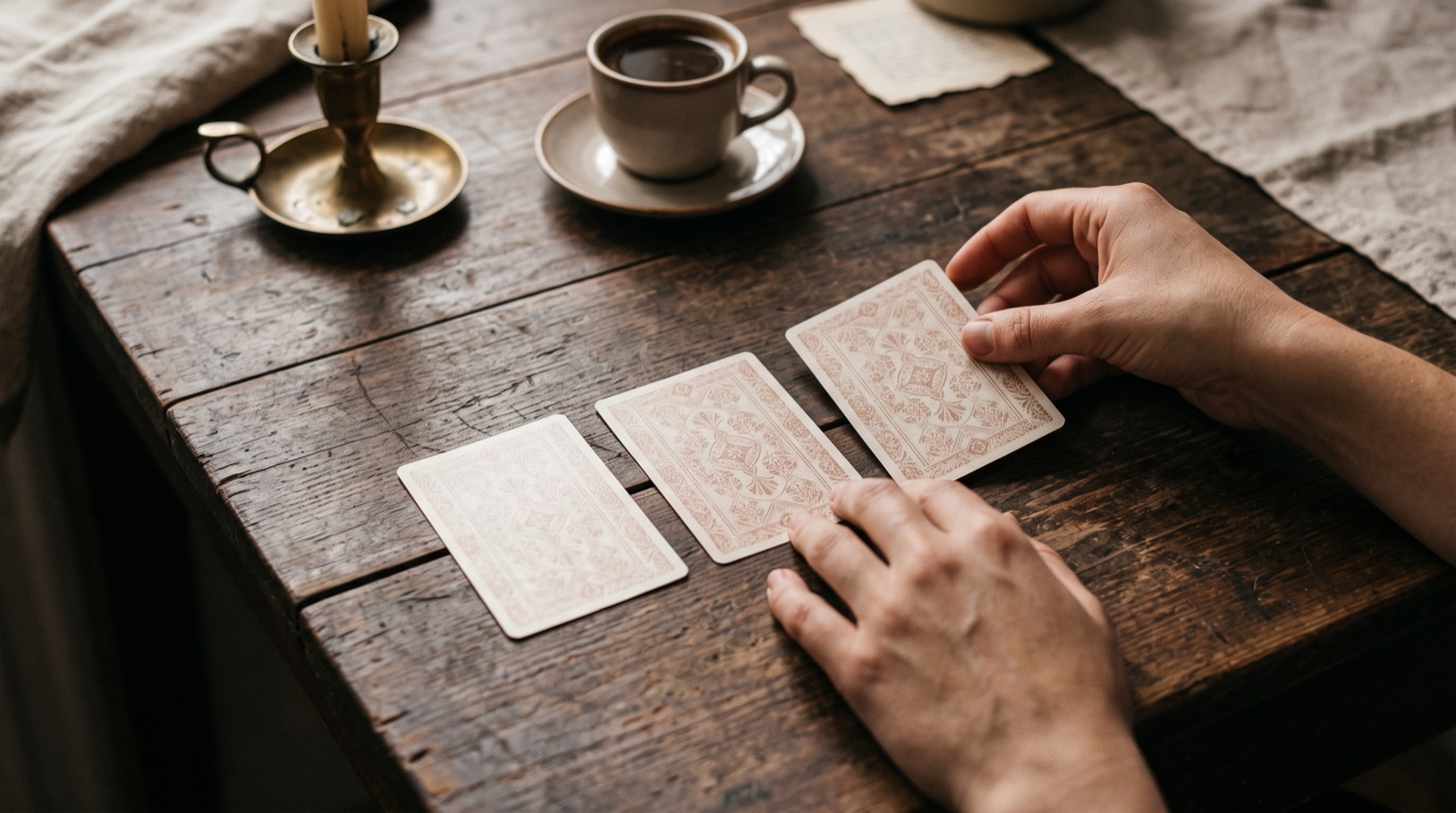
The best way to begin is with pairs. Draw two cards and read the first as the subject and the second as its description, much like a noun and an adjective.
- Ship and Heart: a journey connected to love, or love at a distance.
- Letter and Clover: a message carrying a little good luck.
- House and Mountain: a delay or an obstacle at home.
Swap the order and the emphasis shifts. Heart followed by Ship might read as love that is moving or changing. Try a few pairs each day with a single question in mind, and the deck’s language will start to feel natural surprisingly fast.
Moving On to Lines of Three
Once pairs feel comfortable, draw three cards in a row. You can read the middle card as the heart of the matter and the cards on either side as what colors it, or read the line from left to right as a short sentence. Both approaches are used, and many readers switch between them.
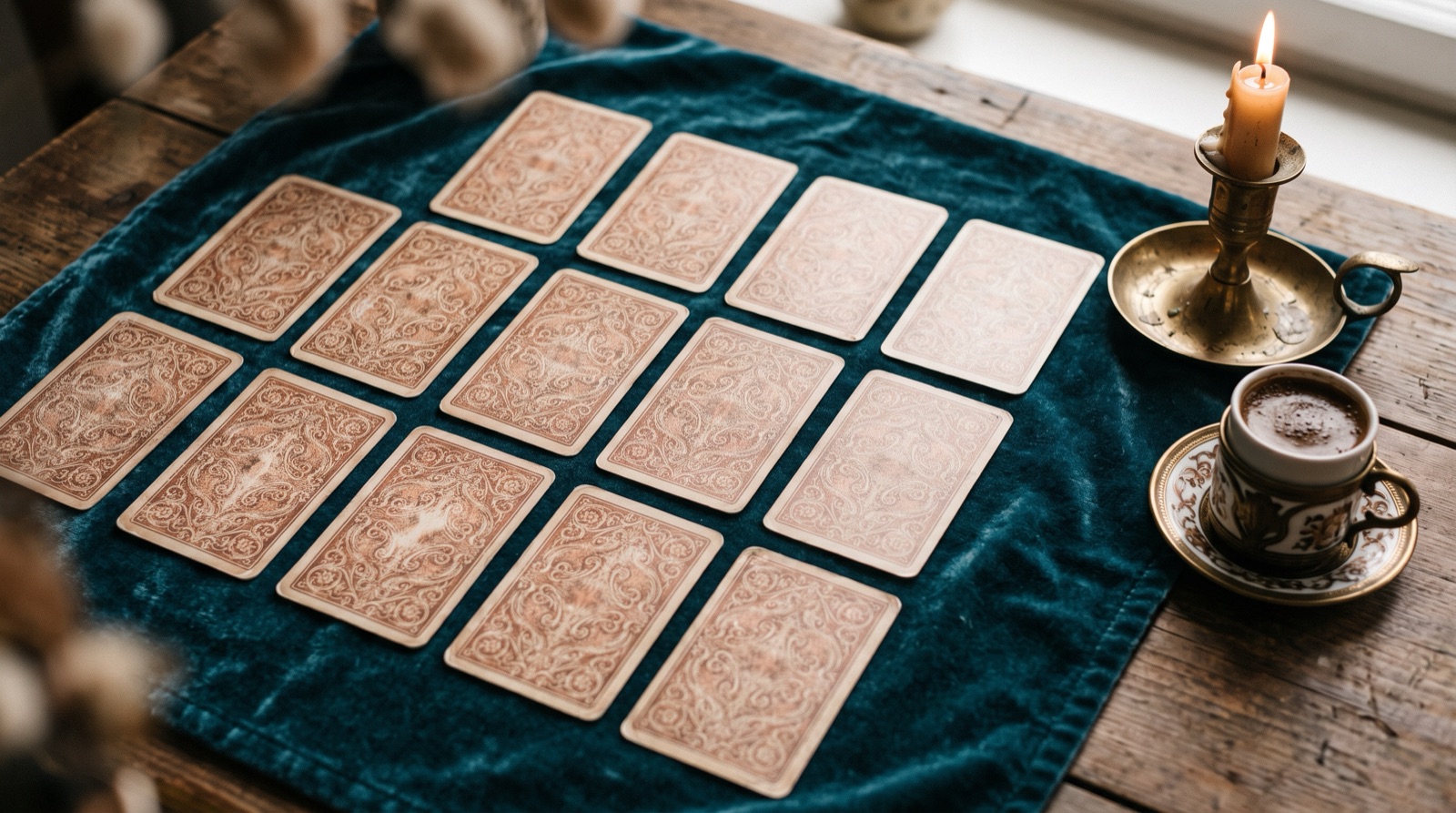
From there, readers often move on to a square of nine cards, and eventually to the Grand Tableau, a layout of all 36 cards that maps an entire situation at once. It is impressive, but there is no hurry to get there.
Reading With a Light Touch
Lenormand’s plain language can make it sound very certain, and that is exactly why it deserves a gentle hand. Treat a reading as a mirror for your own thinking rather than a prediction. The cards are best used to ask “what should I notice?” rather than “what will happen?”
If you enjoy card reading by candlelight, the old customs of All Hallows’ Eve make good company for it, and our look at Halloween divination explores where many of them came from.
Shuffle, draw two cards, and see what they have to say to each other. It is the beginning of a lovely new language. Enjoy your first readings!