Long before costumes and candy, Halloween was a night for asking questions. Across Scotland and Ireland, and later in North America, the last night of October was one of the great evenings of the year for fortune-telling, and most of the questions were about love. Who will I marry? Will we stay together? Will I marry at all?
The customs that answered those questions were playful, a little spooky, and usually done in a crowd of laughing friends. Some have vanished entirely. Others survive in games we still play without knowing why. So where did Halloween divination come from, and what did people actually do? Let’s light a candle and take a look.
Why Halloween Became a Night for Fortune-Telling
The name tells part of the story. Halloween is All Hallows’ Eve, the night before All Saints’ Day on November 1, and in much of northern Europe it sat at the hinge between autumn and winter. A night on the threshold of the dark half of the year felt like a natural moment to ask what lay ahead.
You will often read that all of this descends directly from Samhain, the Gaelic festival that marked the start of winter. The truth is more tangled. Historians such as Ronald Hutton have questioned how much of modern Halloween can be traced in a straight line back to pre-Christian ritual, and some of the most repeated claims about Samhain rest on surprisingly thin evidence. What we can say with confidence is that by the eighteenth century, rural households in Scotland and Ireland spent Halloween night on a lively set of love divinations, and someone was writing them down.
Robert Burns and the Customs He Recorded
That someone was Robert Burns. His poem “Halloween,” written in 1785, follows a gathering of country people through an evening of fortune-telling games, and Burns added notes explaining each custom for readers who did not know them. It remains one of the best snapshots we have of how the night was actually spent.
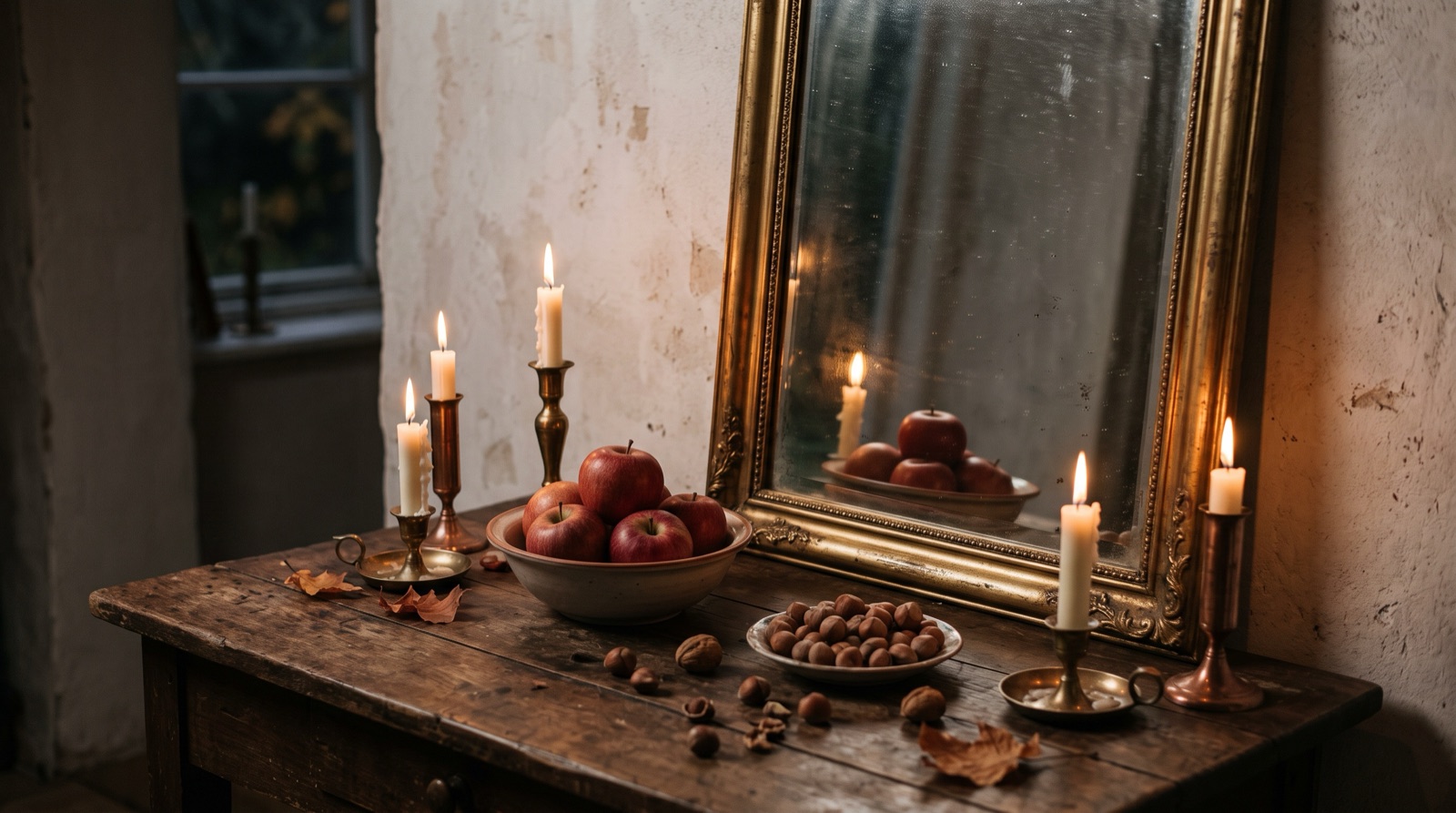
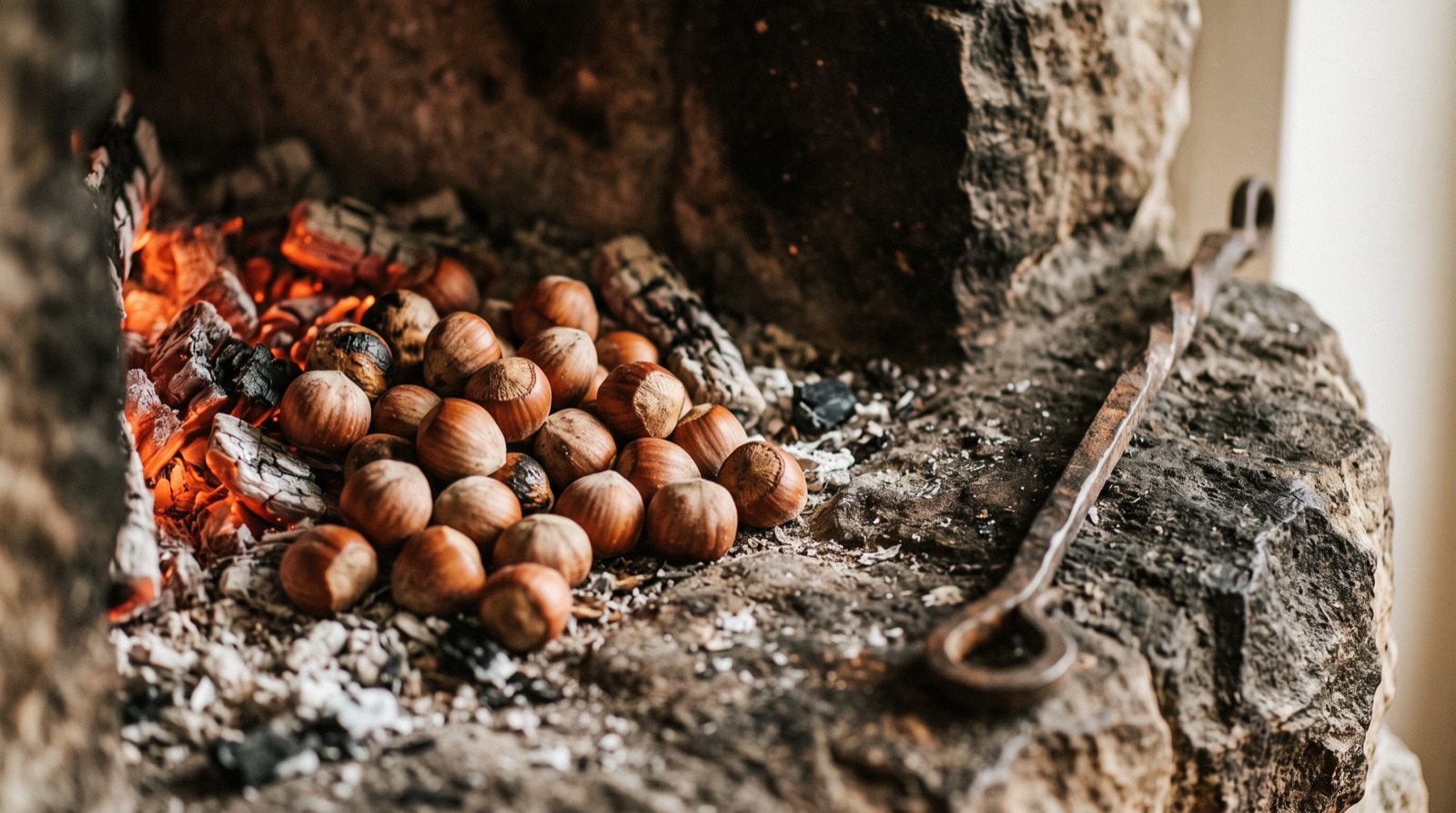
Burning the nuts. Two nuts were named for a couple and set side by side in the fire. If they burned quietly together, the match was expected to last. If one jumped or cracked away from the other, the romance was in for a stormy time.
Pulling the kail. Young people went out into the garden hand in hand, eyes shut, and pulled up the first kale stalk they touched. Its shape, straight or crooked, big or little, described the future spouse, and any earth clinging to the root hinted at their fortune. In the poem, one unlucky seeker wanders off and comes back with a stalk as bent as a sow’s tail.
The apple at the glass. The seeker took a candle, went alone to a mirror, and ate an apple in front of it, hoping to see the face of a future spouse appear as if peeping over their shoulder. Burns includes it, and the same custom turns up in Irish folklore collected well into the twentieth century.
The Three Dishes on the Hearth
The last charm in Burns’s poem needs a blindfold and three bowls set on the hearth: one of clean water, one of dirty water, and one left empty. The seeker is led to the hearth and dips the left hand into one of them. Clean water promised a spouse who had never been married, dirty water a widow or widower, and the empty bowl no marriage at all.
The bowls were rearranged between tries, and the game was played three times. In the poem, an old uncle draws the empty dish all three times and throws the bowls on the fire in a temper. It is a reminder that these customs were always half play and half hope, and that losing gracefully was part of the evening.
Apples, Peels, and the Letter on the Floor
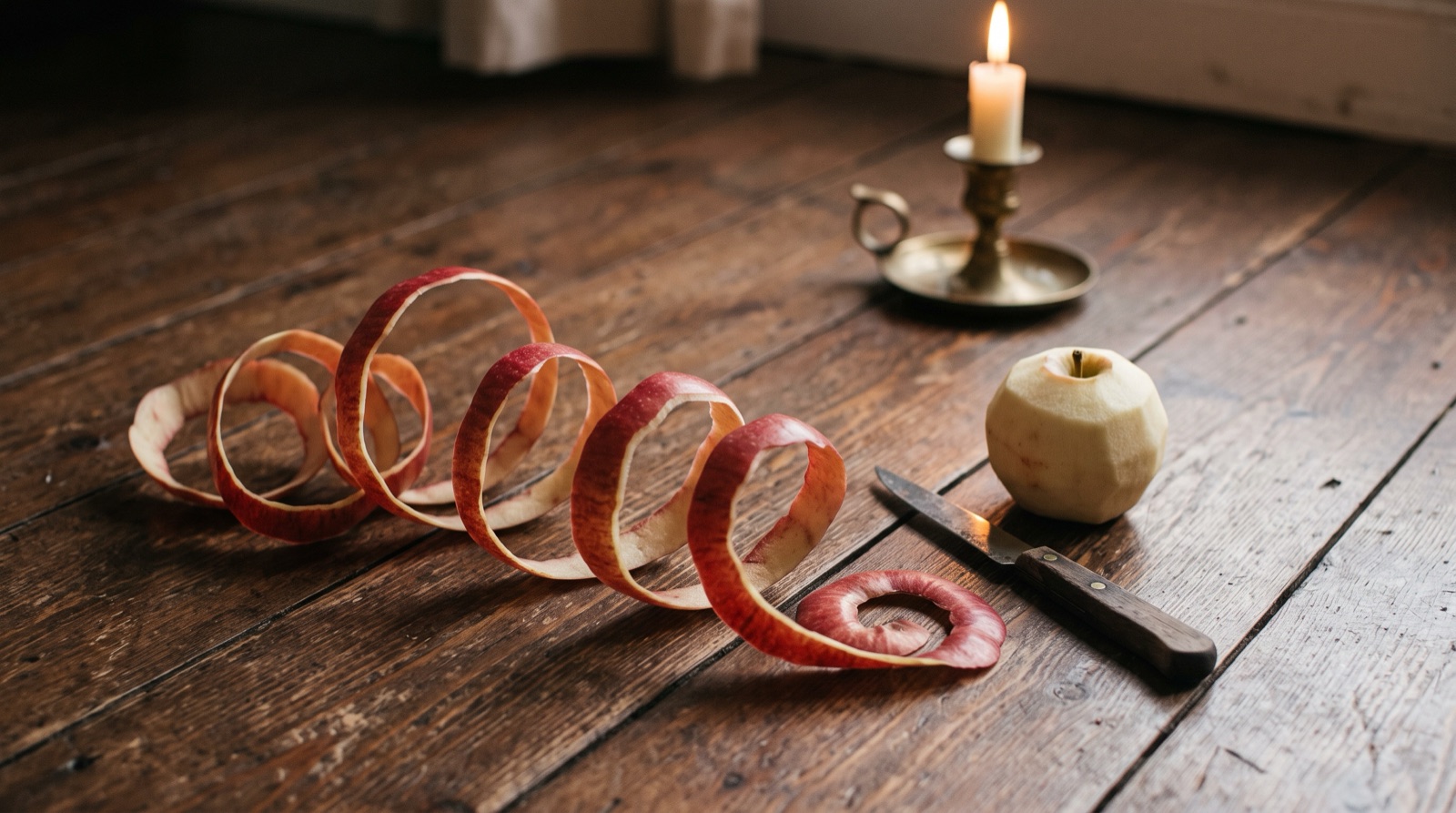
Apples were everywhere on old Halloween, partly because the harvest had just come in. The best-known apple divination is wonderfully simple. Peel an apple in one long, unbroken strip, toss the peel over your shoulder, and look at the shape it makes on the floor. Whatever letter it most resembles is said to be the initial of your future spouse.
Variations traveled with emigrants to North America, where the custom fit neatly into autumn apple season. In some versions the apple had to be won first by bobbing for it in a tub of water, which makes the party game we still play a cousin of the old divination.
Reading an initial in a random shape is the same instinct at work in tea and coffee reading. If you have ever spotted a letter at the bottom of a cup, our guide to tea leaf symbols and what they mean shows how readers approach those shapes.
Mirrors, Water, and Cards
Not every custom was a party game. Some were done alone and in silence, which gave them a shiver the noisy games lacked. Going out alone after dark, and looking into water or glass for a face that was not your own, appear again and again in Halloween lore. They share their logic with older methods such as hydromancy, or divination by water, where meaning is sought on a reflective surface.
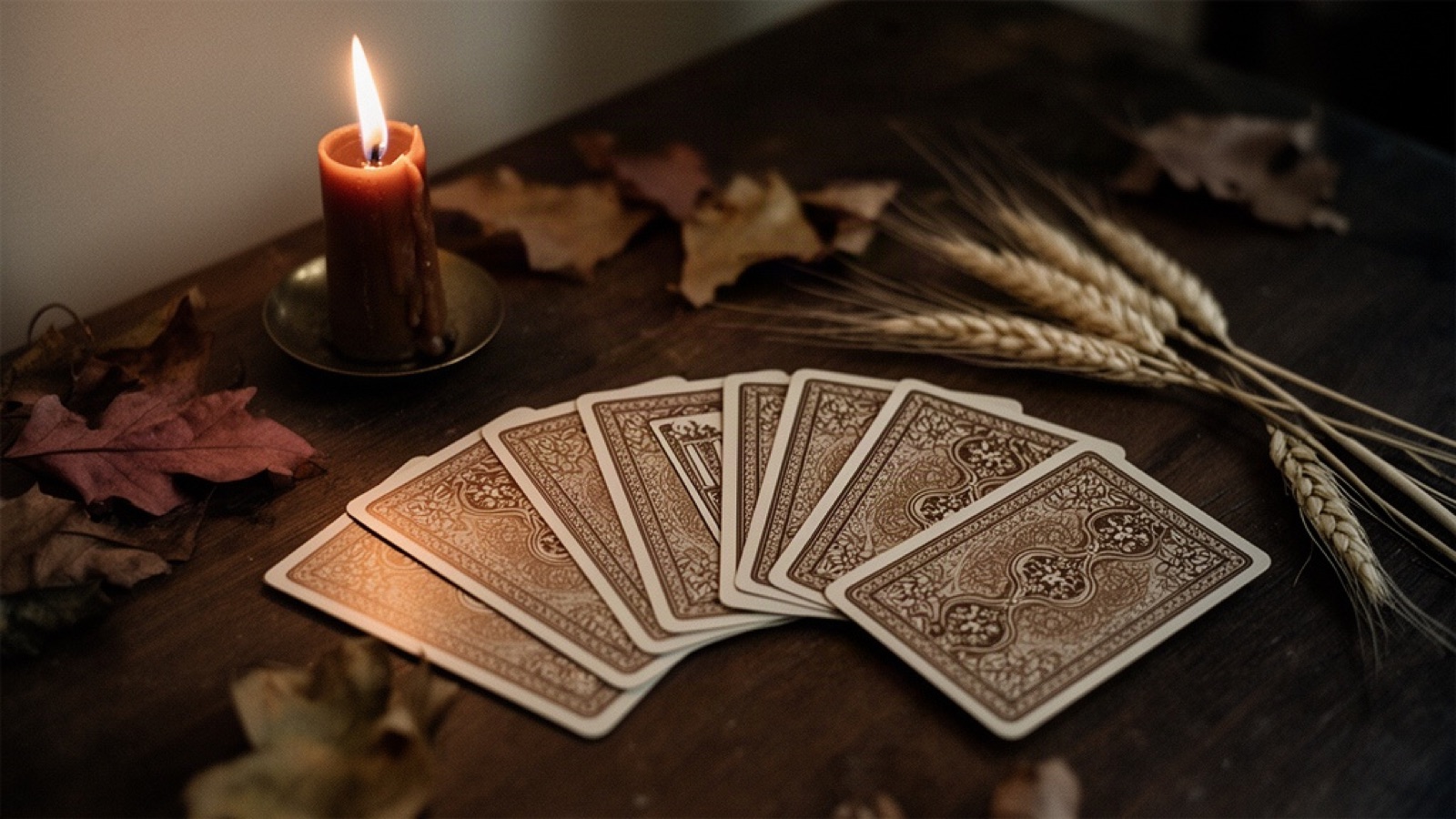
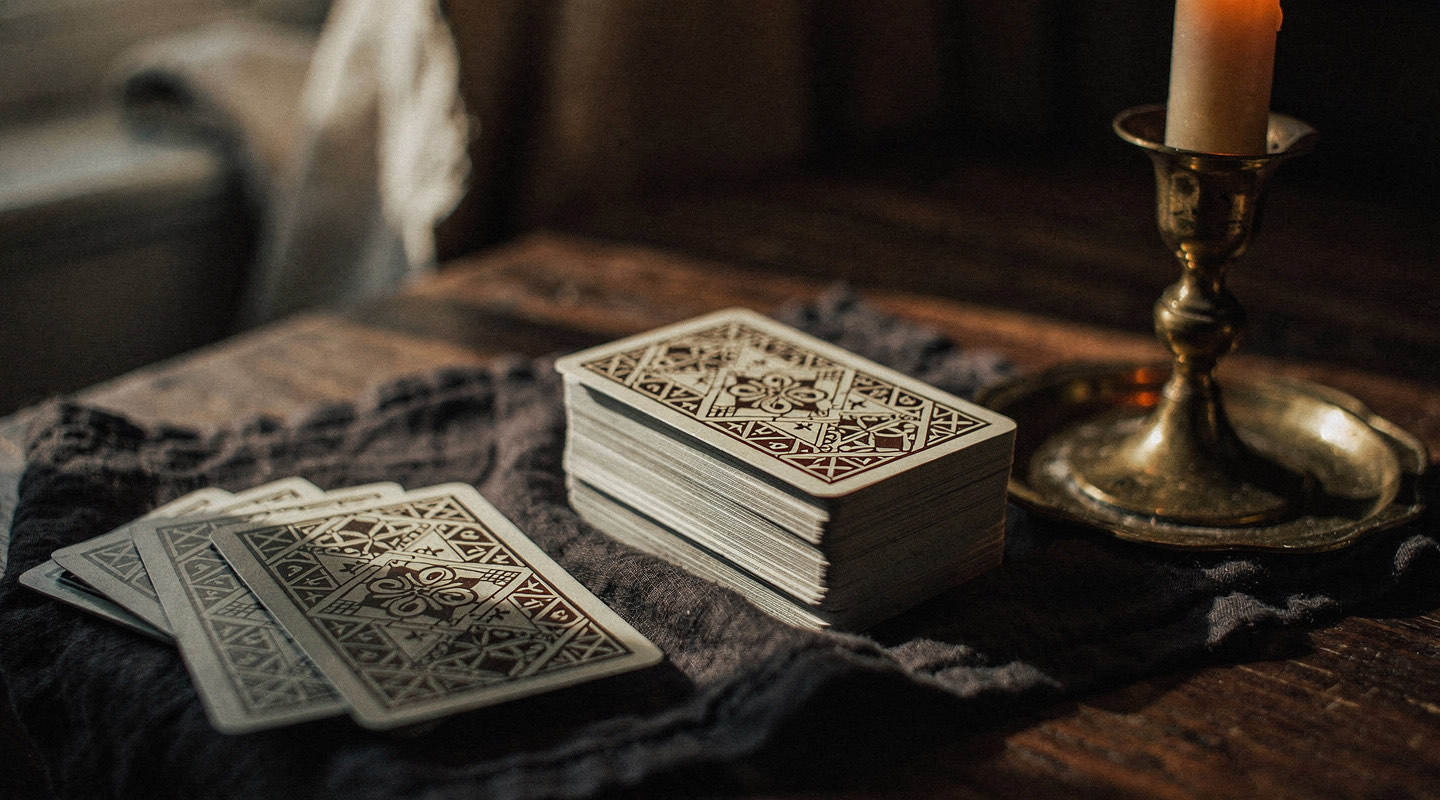
Ordinary playing cards, which nearly every household owned, were another familiar tool for an evening of fortunes. Our guide to fortune-telling with playing cards explains how a standard deck is read, and it makes a fine candlelit activity for the night.
Bringing the Old Customs to Your Own Halloween
You do not need a hearth or a kale patch to borrow some of this magic. A bowl of hazelnuts, a basket of apples, and a few friends are plenty. Peel apples and compare initials. Set out three bowls and take turns with a scarf as a blindfold. If you try the nuts, use a fireplace or a safe fire pit and keep a little distance, since roasting nuts can pop.
If you prefer something quieter, a tarot spread fits the night beautifully. The autumn equinox tarot spread we shared in September works just as well on the last night of October. And with Scorpio season underway, the most introspective sign of the zodiac is keeping you company; our guide to Scorpio season 2026 explains why.
Remember that nobody expected a hazelnut to settle their love life. These customs were a way of saying a hope out loud on a night when the world felt a little closer to mystery. We wish you a happy, candlelit Halloween!