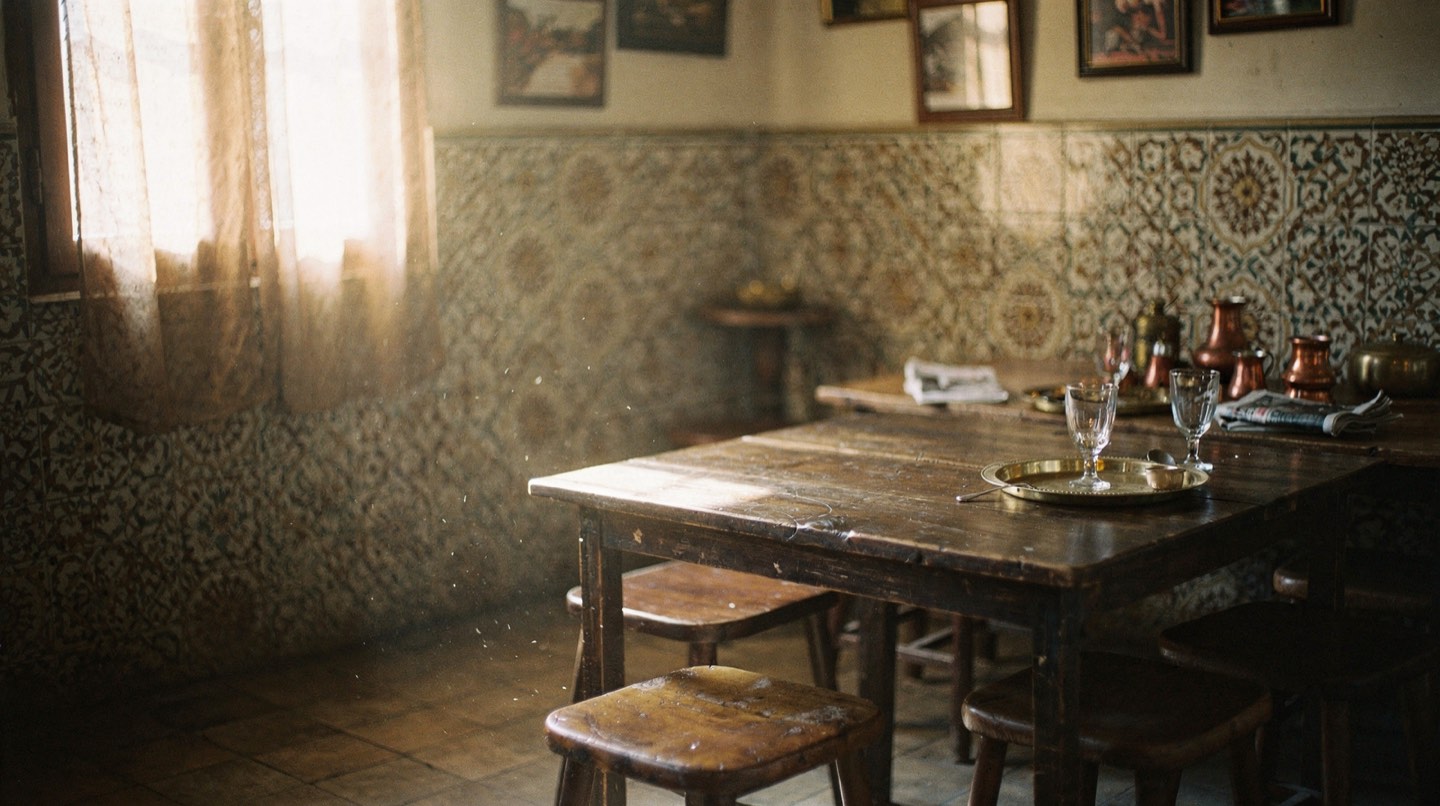
You can drink Turkish coffee almost anywhere now. What you cannot get anywhere is the room it was meant to be drunk in: low stools, a marble tabletop worn smooth, someone else’s backgammon game clattering two tables over, and no particular reason to leave.
Istanbul still has those rooms. Some have been in the same spot for a century, a few for longer, and the good ones have changed remarkably little. So where did the habit start, what exactly is a kıraathane, and which of the historic coffeehouses are worth planning an afternoon around?
Where Istanbul’s Coffee Habit Began
The city’s first coffeehouse opened in 1555, set up by two merchants from Syria who had brought beans north from the Arabian Peninsula. It was a commercial gamble on a drink most of the city had never tasted.
It worked immediately. Within a few decades coffeehouses had spread across Istanbul, and they had become something the original merchants almost certainly did not plan: the first public rooms in the city where men of every class and faith sat at the same height and talked. That was novel enough to make the authorities nervous, and coffeehouses were periodically shut down and reopened over the following centuries.
The drink itself arrived with its method already settled, and that method is still the one in use today. If you want the longer version of that story, the history of Turkish coffee traces how it reached the city and what it displaced.
What a Kıraathane Actually Was
The word tells you most of it. Kıraathane joins “reading” and “house,” and that is exactly what these places were: rooms where you went to read, to hear things read aloud, and to talk about them afterward.
By the seventeenth century the city was full of them. Poets recited. Janissaries played backgammon. Travelling storytellers called meddah held a room for hours with a single tale, working a crowd that had paid for coffee rather than for the performance. Newspapers, when they came, were read out for those who could not read themselves.
That is the part worth carrying into a modern visit. A kıraathane was never a place you passed through on the way to something else. The coffee was the excuse; the sitting was the point.
Şark Kahvesi, Inside the Grand Bazaar
Deep inside the Grand Bazaar, Şark Kahvesi has been in the same spot since 1958. The name means “east,” and it came from the traders who arrived from eastern Anatolia in the early Republican years to work as shop assistants in the bazaar and needed somewhere of their own to sit.
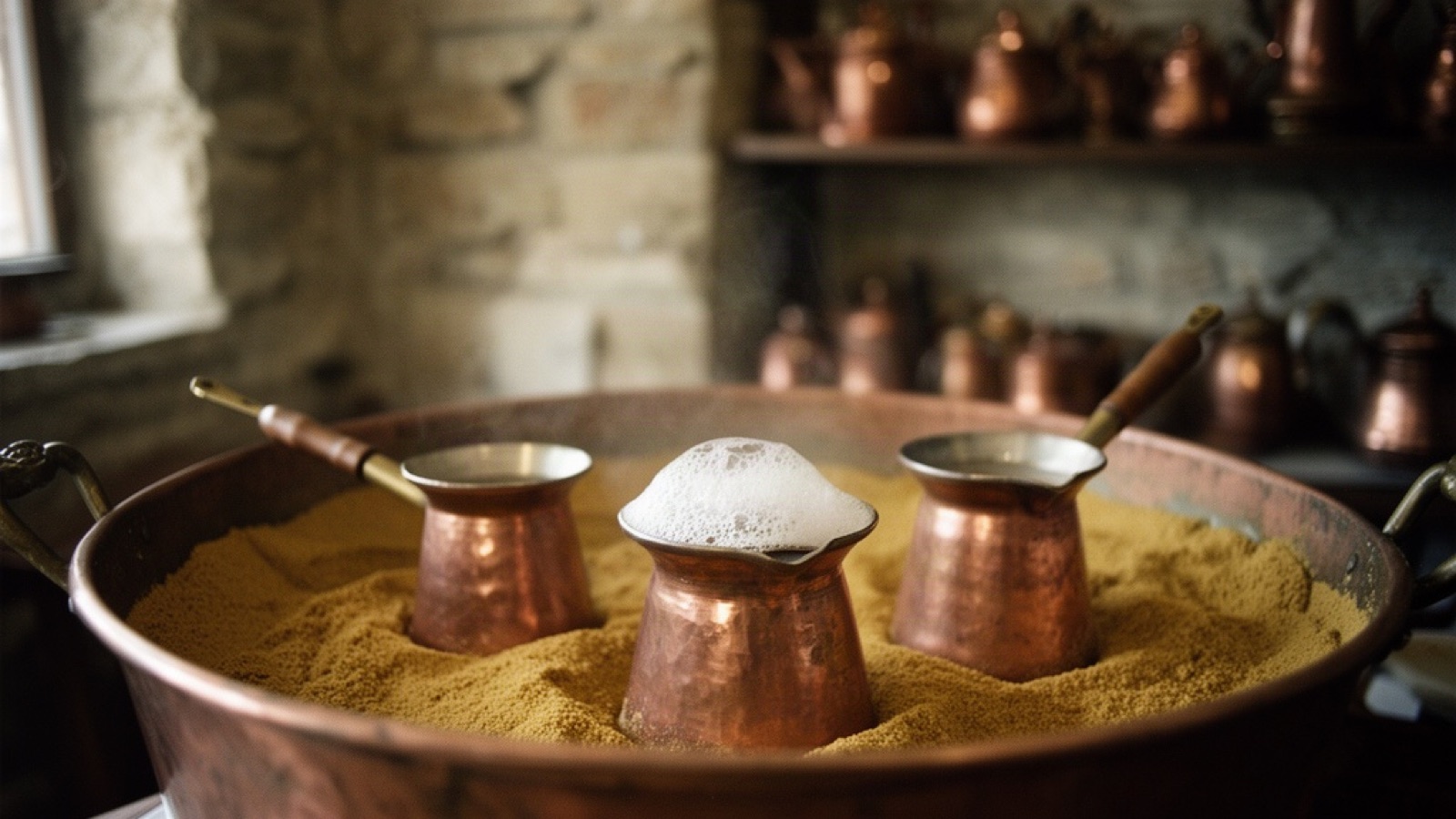
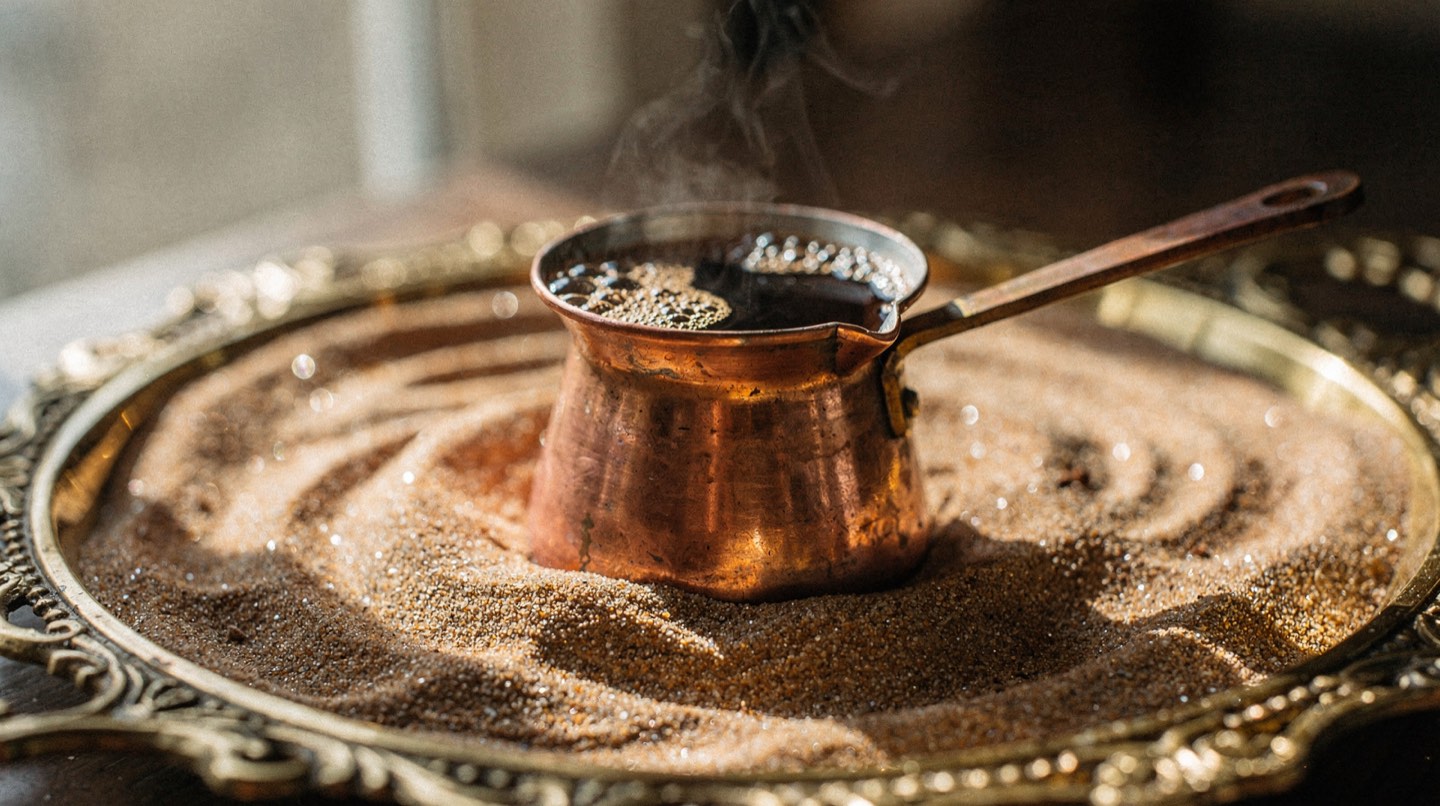
The room is the draw: wooden tables, tiled walls, and a ceiling crowded with Ottoman bric-a-brac collected over decades. The coffee is brewed the old way, in a copper cezve buried in hot sand, which heats the pot evenly from every side and gives the person making it precise control by simply lifting it a little higher in the sand.
It is firmly on the tourist path now, and it makes no secret of that. Go anyway, and go early, before the bazaar fills.
Fazıl Bey, on the Kadıköy Side
Cross to the Asian shore and the atmosphere changes. Fazıl Bey’in Türk Kahvesi has been roasting, grinding, and serving its own coffee in Kadıköy since 1923, which makes it one of the oldest continuously running coffeehouses in the city.
The house style is smooth and distinctly chocolatey rather than sharp, which is a roasting decision more than a brewing one. It is a small place in a busy market street, so you may well end up standing, and standing there for ten minutes is not a hardship.
Kadıköy is the right side of the water for this kind of afternoon in general. The market is next door, the ferry back is a pleasure rather than a chore, and nobody is in a hurry.
Mandabatmaz, Off İstiklal
A few steps off İstiklal Avenue in Beyoğlu, Mandabatmaz has been serving since 1967 out of a room barely bigger than a corridor. The name is a boast about the foam, the claim being that it comes out thick enough that a water buffalo would not sink through it.
The foam really is the thing here. A proper Turkish coffee is judged on its köpük before anyone tastes it, and a cup arriving flat is considered a failure regardless of what is underneath. This is a good place to calibrate your own expectations before you go home and try to match it with the classical cezve method.
How to Order, and How to Sit
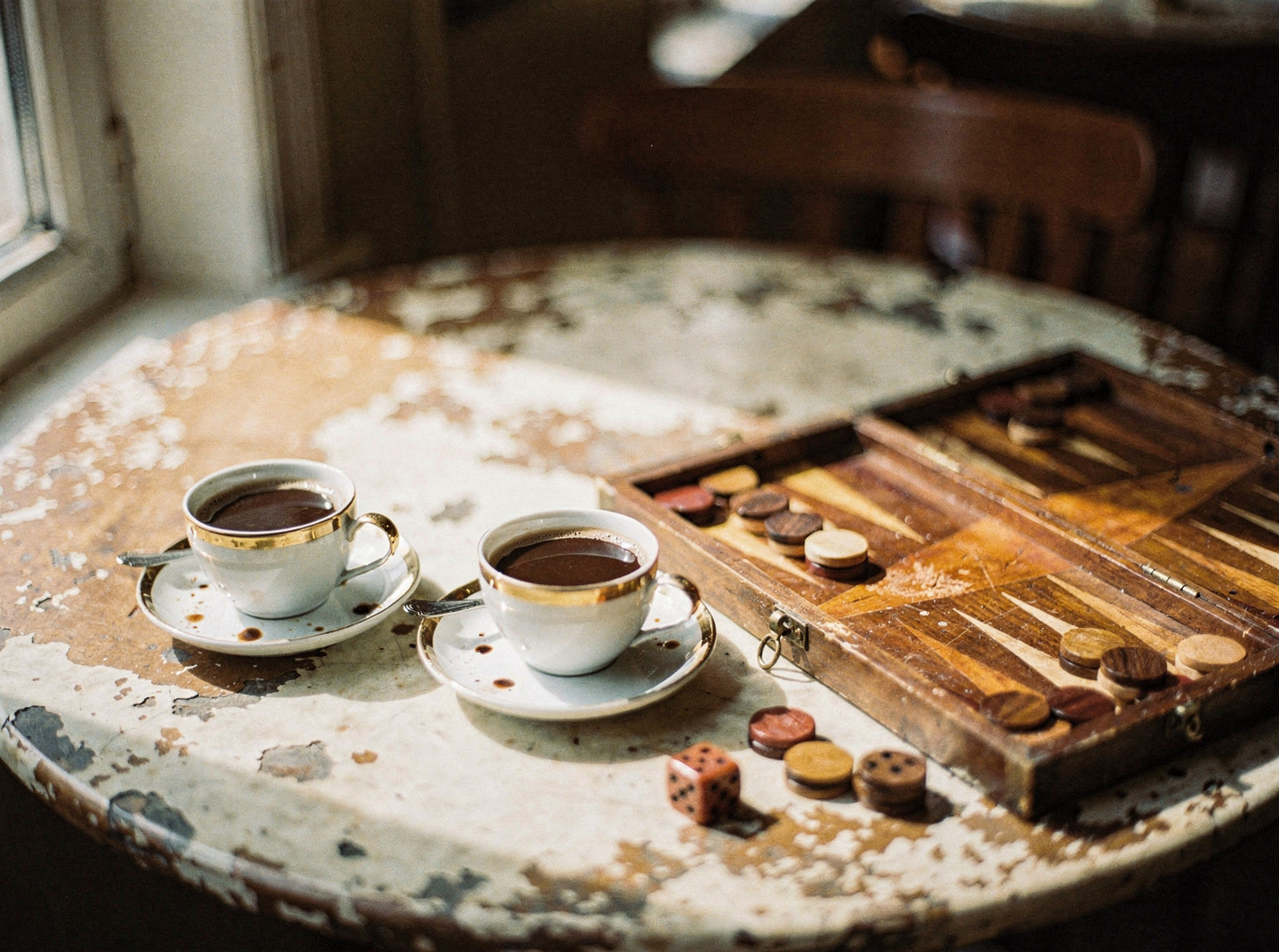
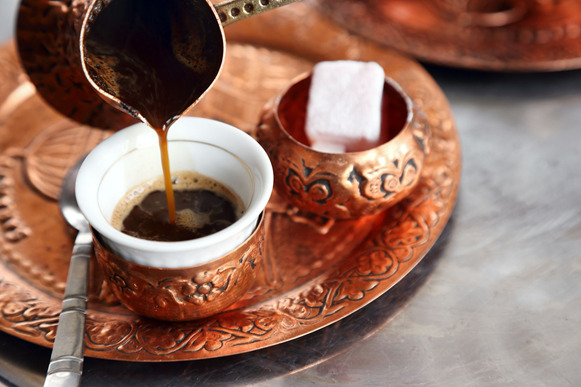
Sweetness is chosen when you order, not after, because the sugar goes into the pot rather than the cup. Sade is unsweetened, az şekerli lightly sweet, orta medium, and çok şekerli sweet. Order orta if you are unsure. It is the safest first cup and the most common one.
Water comes alongside and is meant to be drunk first. Lokum, if it appears, is one piece and comes after. Nobody will rush you for the table, and the correct amount of time to spend on a cup that size is far longer than seems reasonable. The rest of the etiquette around serving and drinking it is gentle and easy to pick up by watching.
One practical note for a summer visit: these rooms are small, old, and often unairconditioned. Mornings and late afternoons are far more comfortable than the middle of the day, and a good many people now order the cold version instead, which is worth knowing how to make yourself once you are home.
If You Only Have One Afternoon
Pick a side of the water and stay there. The mistake most visitors make is trying to tick off three coffeehouses across two continents in a day, which turns a slow tradition into a schedule.
And leave the cup upturned when you finish, if the place feels right for it. Reading the shapes left in the grounds has been part of the coffeehouse habit for as long as the coffeehouses have existed, and it is treated exactly as it should be: not as a forecast, but as a reason to sit for another ten minutes and talk about something other than the day.
We wish you a long, unhurried afternoon.