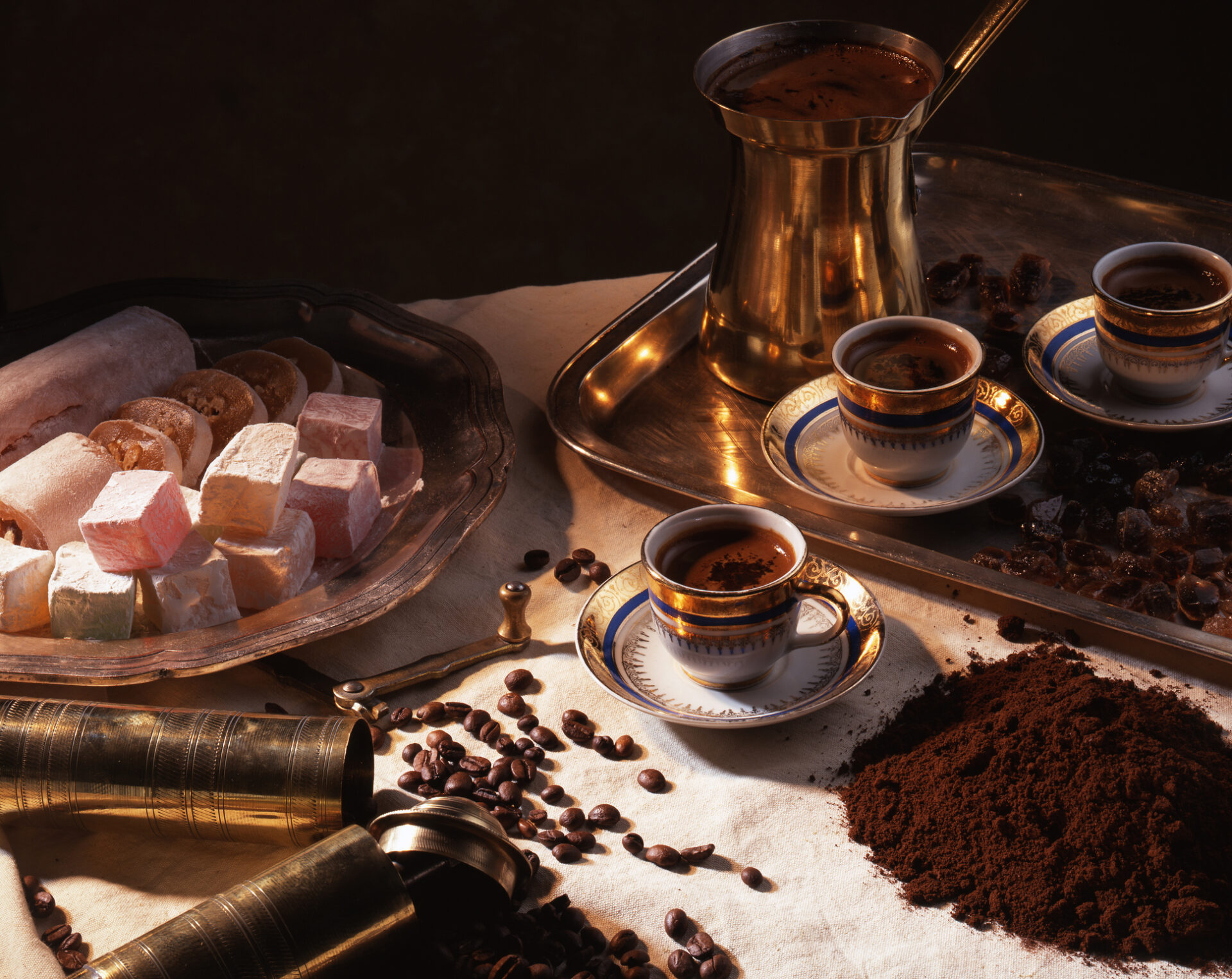

You did everything the way you were shown. Fine grind, small pot, low flame, no stirring. The coffee tastes fine. And yet the cup arrives flat, with a thin brown ring where a thick pale crown should be.
It is the most common complaint about home-brewed Turkish coffee, and the frustrating part is that the causes are almost never mysterious. There are five of them, they are all fixable, and once you know which one is yours you will not lose the foam again.
What the Foam Actually Is
The layer on top has a name, köpük, and in Turkey a cup served without it is considered a failed cup regardless of how it tastes. That sounds harsh until you drink the two side by side.
Foam is not decoration. It forms as gases trapped in the very fine grounds escape while the coffee heats, held in a stable layer by the oils and the suspended solids. Because it sits on top, it insulates the coffee underneath and slows the cooling. It also softens the first sip, which is otherwise the most intense mouthful in the cup.
So when the foam fails, you are not just losing the look. You are losing texture, temperature, and the gentlest part of the drink.
Reason One: The Heat Is Too High
This is the cause the overwhelming majority of the time.
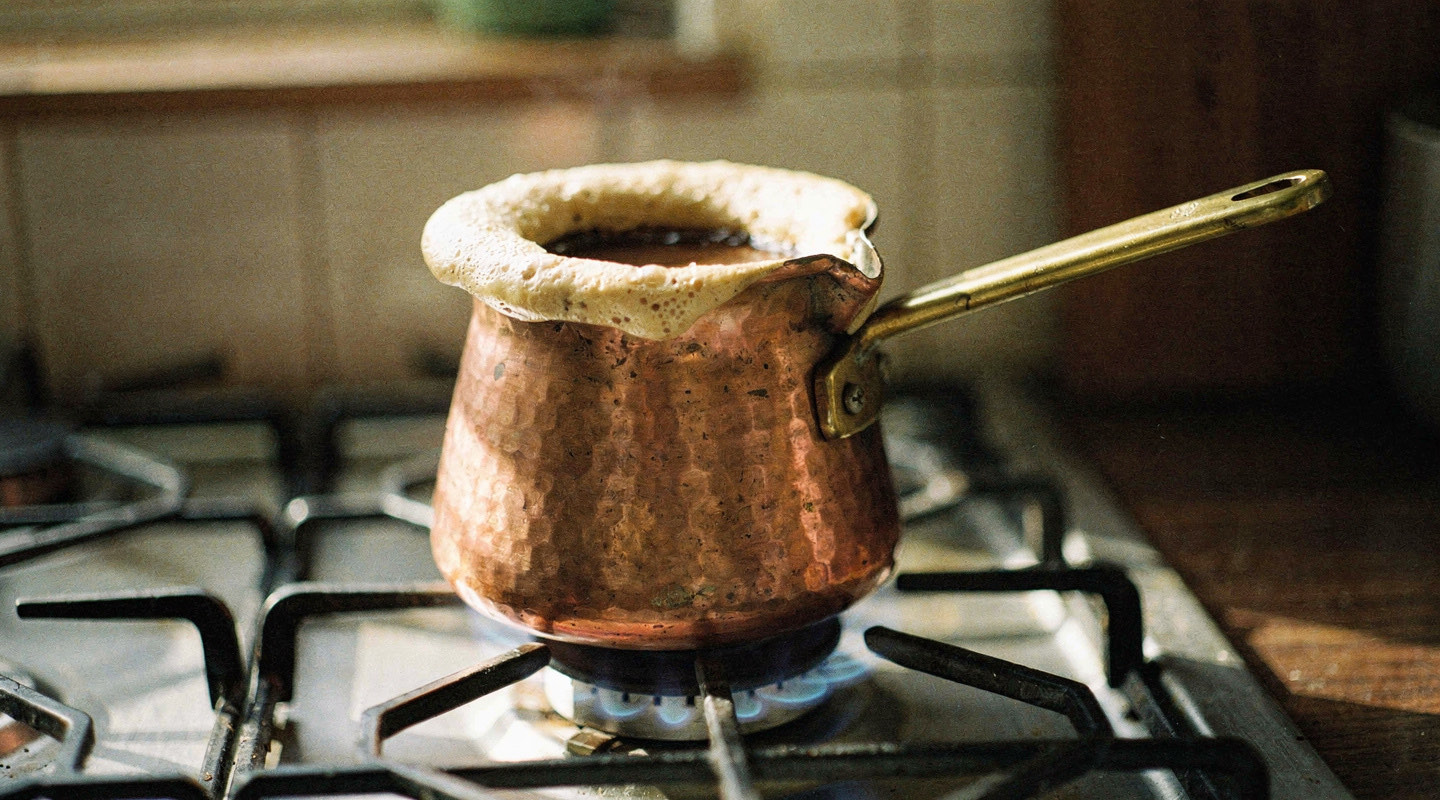
Foam needs time to build, and high heat does not give it any. The water reaches boiling before the layer has formed and stabilized, the bubbles that did form collapse, and what survives is a thin scum. Boiling also strips out the aromatics and pushes the coffee bitter, so a rushed cup tastes worse in two ways at once.
Turkish coffee should never boil. Not once, not briefly. The target is a slow rise over three to four minutes on the lowest flame your stove will hold. If your smallest burner still runs hot, use a heat diffuser, or move the cezve on and off the flame to keep it just below a simmer.
The moment to pull it is when the foam climbs toward the rim and the surface starts to look like it might break. That is the peak. A second later it is gone.
Reason Two: Your Coffee Isn’t Fresh
Stale coffee will not foam properly no matter how carefully you brew it.
The gases that create the foam start leaving the moment the beans are ground, and Turkish grind is so fine that it has enormous surface area and loses them fast. A bag opened three weeks ago has very little left to give.
Buy small quantities and buy often. If you can, grind just before brewing, which for this grind size means either a dedicated Turkish hand mill or a burr grinder that goes genuinely fine. Store what you have in an airtight container away from heat and light, not in the freezer door. The difference between a bag opened yesterday and one opened last month is visible in the cup, not just tasteable, and it is worth being deliberate about which beans you buy in the first place.
Reason Three: The Grind Is Too Coarse
Turkish coffee is ground finer than espresso. Meaningfully finer. It should feel like powdered sugar or flour between your fingers, with no grit at all.
Most home grinders cannot reach it. If yours bottoms out at espresso fine, you will get a drinkable cup and a disappointing crown, because the particles are too large to hold a stable foam. Many Turkish grocers will grind a bag to order, which is the easy fix, though you then lose freshness faster.
A quick test: rub a pinch between thumb and forefinger. If you can feel individual particles, it is too coarse.
Reason Four: You Stirred It at the Wrong Time
Stir once, at the very start, while the water is still cold and you are combining the coffee and the sugar. That is the only stir.
Once the pot is on the heat, leave it alone. Stirring while it warms breaks up the foam layer as it is trying to form, and there is no recovering it afterward. The same goes for the common instinct to give it a quick stir just before pouring, which undoes several minutes of patient work in about a second.
Pour gently too. A hard pour from height collapses what you built. Tilt the cup slightly and let the coffee run down the inside.
Reason Five: The Ratio or the Water Is Off
Start with cold water, always. Cold water heats slowly and that slow rise is exactly what the foam needs. Starting from hot water out of the kettle skips the useful part of the process.
On proportions, one heaping teaspoon of coffee to roughly 70 to 100 ml of water is the usual range. Too little coffee and there is not enough material to build a foam. Too much and the pot becomes a sludge that traps the gases instead of releasing them.
Do not overfill the cezve either. It wants to be no more than two thirds full, because the foam needs somewhere to rise into. A pot filled to the neck will boil over before it crowns.
A Quick Diagnostic

Work through it in this order, since it moves from most to least likely:
- Foam appears, then vanishes before you pour. Heat is too high, or you let it go a few seconds too long.
- Barely any foam forms at all. Stale coffee, or a grind that is too coarse.
- Foam forms but collapses in the cup. You poured too hard, or stirred late.
- It boils over every time. The cezve is overfilled, or the flame is too big for the pot.
- Bitter as well as flat. It boiled. Lower the heat and pull it earlier.
One more thing worth knowing: some people spoon the first bit of foam into each cup before returning the pot to the heat for the rest. That trick guarantees everyone gets a crown when you are serving several people, which matters, since the ritual of serving it well is half of what makes the drink what it is.
If you are still troubleshooting, it is worth going back through the classical method step by step with the five causes above in mind. And if the weather has you reaching for something cold instead, the iced version forgives a thin foam entirely, since the ice does the work the crown would have done.
Low flame, fresh coffee, one stir. That really is the whole secret.