

You have the coffee. You have the little cups. Maybe you have been reading about the ritual for weeks. What you do not have is a cezve, the small long-handled pot traditionally used to brew Turkish coffee. Good news: you can still make a very respectable cup today.
A cezve makes the process easier, but it is not magic. What matters most is the grind, the heat, and your patience. So how do you make Turkish coffee without a cezve, and what should you use instead? Let’s start with the pan.
What Can You Use Instead of a Cezve?
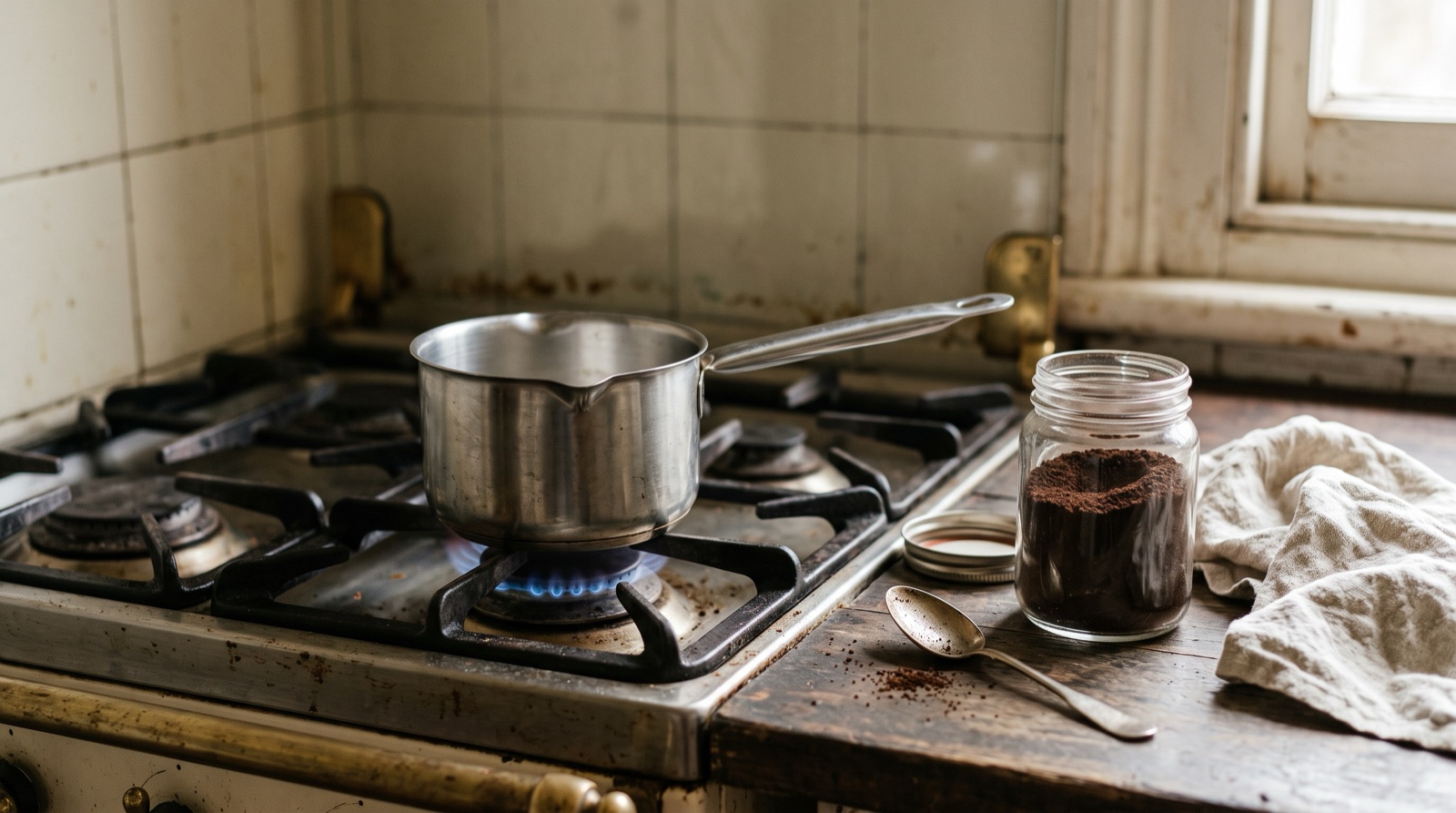
The best substitute is the smallest pan in your kitchen. A little saucepan or milk pan, ideally with a pouring lip, comes closest to doing a cezve’s job. Look for a narrow base and a heavy bottom that spreads the heat evenly.
Size matters more than material. A cezve is narrow on purpose, so the foam climbs a slim column instead of spreading thin across a wide surface. In a big pan, the same amount of coffee makes a shallow puddle with nowhere to rise, and the foam barely forms. If your smallest pan still feels large, brew two or three cups at once rather than one, so the coffee has enough depth to work.
What will not work? An espresso machine, a French press, and a drip machine all separate the grounds from the coffee, and Turkish coffee is never filtered. The grounds stay in the cup, which is the whole point.
Get the Grind Right First
The single biggest factor is the grind. Turkish coffee is ground to a fine powder, much finer than espresso, closer to flour than to sand. Most home grinders cannot get there, and blade grinders certainly cannot.
The easy answer is to buy coffee already ground for Turkish brewing. Look for packages sold as Turkish coffee, or ask a coffee shop to grind your beans on its finest setting. Store it airtight and use it quickly, since such a fine powder goes stale faster than whole beans. If you want to go deeper into the beans themselves, our guide to choosing coffee beans covers the basics.
How to Make Turkish Coffee in a Saucepan

This makes two cups, the easiest amount for a small pan.
Ingredients:
- 2 Turkish coffee cups of cold water, measured with the cups you will serve in
- 2 heaping teaspoons of very finely ground Turkish coffee
- Sugar to taste, decided before you start
Instructions:
- Pour the cold water into the pan, then add the coffee and the sugar. Everything goes in cold.
- Stir gently a few times, until the coffee is fully wet and no dry powder floats on top.
- Set the pan over the lowest heat your stove allows. Low heat gives the foam time to build.
- Do not stir again. Watch as a dark foam gathers at the edges and slowly spreads inward.
- Just before it boils, when the foam begins to rise, lift the pan off the heat.
- Spoon a little foam into each cup. Return the pan to the heat for a second short rise, then pour slowly, close to the cup, letting the coffee slide down the side.
- Let the cups rest for a minute so the grounds settle, then serve with a glass of water.
If you have brewed with a cezve before, you will notice the method is exactly the same. Our guide to cooking classical Turkish coffee the authentic way walks through the traditional version step by step.
Why Is My Foam Disappearing?
The foam is the pride of a Turkish coffee, and a pan makes it a little harder to win. If yours is thin or missing, check these first:
- The heat was too high. Fast heat boils the coffee before the foam can build. Go lower and be patient.
- You stirred after heating. One stir at the start, then hands off.
- The pan is too wide. Brew more cups at once, or find a smaller pan.
- It boiled. A full boil collapses the foam and leaves the cup tasting bitter.
- The coffee is stale. Old grounds foam poorly whatever you do.
For a closer look at all the usual suspects, see our post on why Turkish coffee has no foam. Once your foam is reliable, you can start playing with flavor, and our recipe for spiced Turkish coffee is a lovely next step.
Should You Buy a Cezve After All?
If you enjoy the cup, yes. A small copper or stainless steel cezve is inexpensive, takes up almost no space, and makes the whole process easier and more forgiving. The narrow neck does much of the foam’s work for you, and the long handle keeps your hand away from the heat.
Until then, your little saucepan will do just fine. And when you do bring a cezve home, a tray, a few cups, and a jar of coffee are all it takes to build a Turkish coffee corner at home that makes the ritual feel special every day.
The cezve is a lovely tool, but the heart of Turkish coffee is time and attention. Give the cup both, and it will reward you, whatever pot it came from. Enjoy every sip!