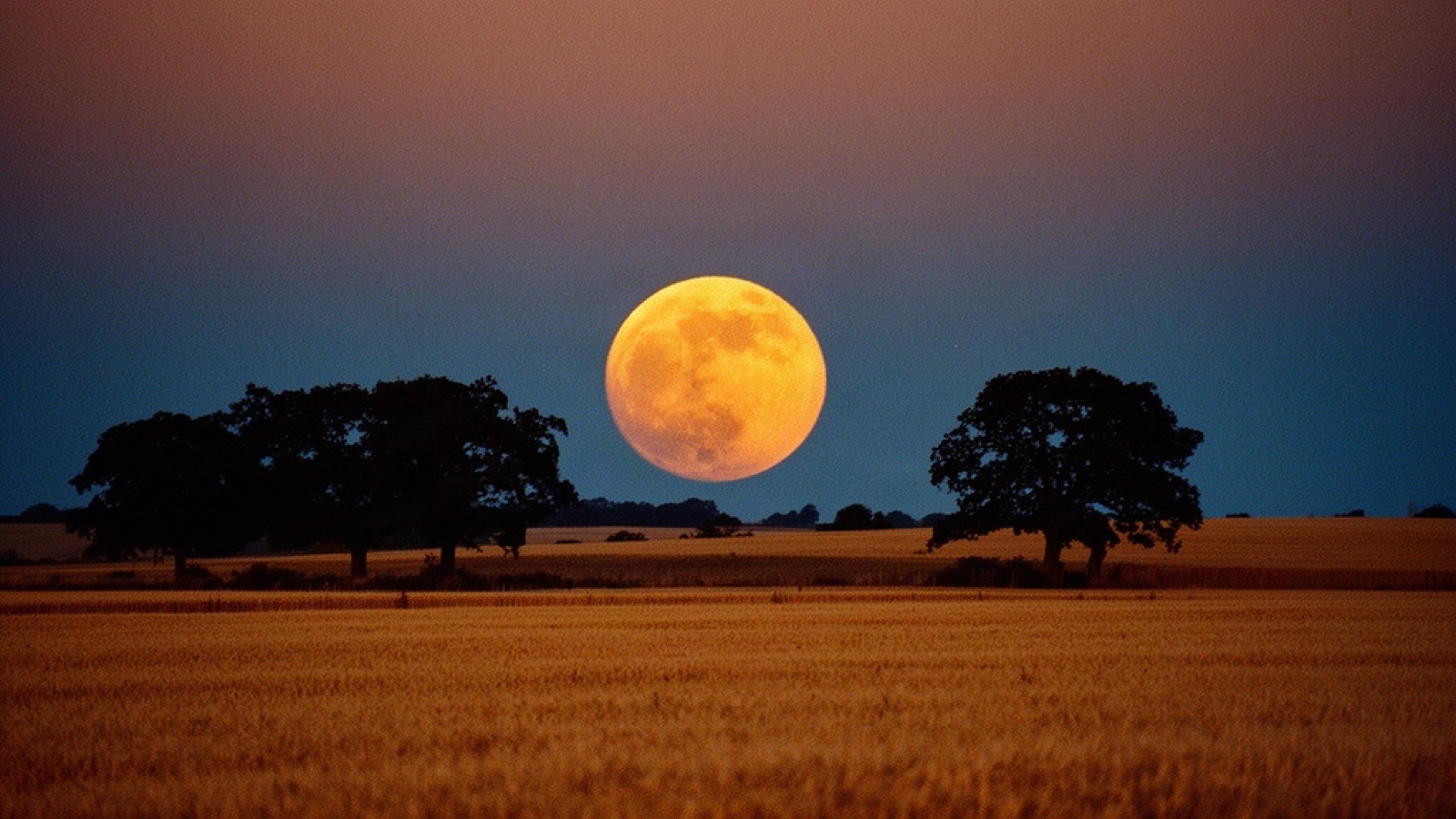

Every so often the calendar hands us something genuinely rare, and this August is one of those times. On Wednesday the twelfth, the Moon will pass fully in front of the Sun, and for a little over two minutes a strip of the northern world will go dark in the middle of the day.
It is the first total solar eclipse visible from mainland Europe since 1999. That is a long wait by anyone’s measure, and it has people booking trips who have never given the sky a second thought. So where exactly will it be visible, and what has the astrological tradition always made of an eclipse?
When and Where It Happens
The path of totality begins in remote northeastern Siberia, crosses the Greenland ice cap, clips the western edge of Iceland including Reykjavik, then runs down across the North Atlantic and makes landfall in northern Spain. From there it cuts diagonally across the peninsula to the Mediterranean and out over the Balearic Islands, brushing the far northwestern tip of Portugal on the way.
The new moon itself falls at 17:36 UTC, which is 20:36 in Istanbul. Maximum totality lasts 2 minutes and 18 seconds.
Outside that narrow band, a partial eclipse will be visible across much of Europe, northwestern Africa, most of Canada, and parts of the northern United States. Turkey is not among them. If you are reading this from Istanbul or Ankara, the Sun will already be gone by the time it matters, so this is one to follow through other people’s photographs rather than to plan an evening around.
Why This One Is Unusual
Two things set it apart from an ordinary total eclipse.
The first is the geography. Totality over accessible, well-connected parts of Europe is genuinely uncommon, and the twenty-seven-year gap since the last one is why Spanish and Icelandic hotels along the path sold out well over a year in advance.
The second is the angle. In Spain the Sun will not be fully covered until late evening, very close to the horizon. A low-sun eclipse looks quite different from an overhead one: the darkness arrives across a landscape already turning gold, and the corona appears just above the skyline rather than at the top of the sky. Photographers have been waiting years for exactly this.
What an Eclipse Means in Astrological Tradition

Astronomically, an eclipse is orbital mechanics and nothing more. Astrologically, it has carried weight for as long as people have been keeping records, and it is worth understanding what that tradition actually claims.
A solar eclipse is a new moon with the volume turned up. New moons have always been read as beginnings, the dark point of the cycle where something is planted rather than harvested. An eclipse is the same idea intensified, and because eclipses arrive in pairs and families rather than singly, the tradition treats them as chapters rather than moments. Practitioners generally read the influence of a total solar eclipse as unfolding across the following six months rather than on the day itself.
What tradition does not do, at least not honestly, is tell you what will happen to you. An eclipse is read as a marker, a place in the cycle worth paying attention to. If you are new to how any of this is structured, what astromancy is and how it is practiced is the useful starting point.
The Leo Part: Twenty Degrees
This eclipse falls at 20 degrees of Leo, and that placement is what most of the astrological commentary is about.
Leo’s traditional territory is visibility. Not fame exactly, but the willingness to be seen: creative work you put your name on, warmth that is offered rather than withheld, play, generosity, and the particular courage it takes to stop hedging. Read symbolically, an eclipse here points attention at where you have been dimming yourself, and invites reflection rather than announcement.
There is a second detail that astrologers have been noting. This is the first solar eclipse to land on the new Leo and Aquarius axis, which became active in late July 2026 after nearly two decades on the previous one. That axis pairs Leo’s individual expression with Aquarius and its concern for the collective, and the tension between the two is the theme practitioners will be working with for a while.
Whose Chart It Touches Most
The conventional reading is that an eclipse is felt most by people with planets or angles close to its degree, which here means roughly 15 to 25 degrees of the fixed signs: Taurus, Leo, Scorpio, and Aquarius.
Sun sign alone will not tell you whether that includes you. It depends on where the degree falls across your whole chart, which is the practical argument for learning to read a birth chart properly rather than relying on a monthly column. The same logic applies to your moon sign and your ascendant, both of which are far more specific to you than your Sun.
And if none of it lines up with your chart, nothing is wrong. Most eclipses pass over most people quietly, which is worth saying, because a tradition that claims everything is significant for everyone is not really telling you anything.
Watching It Safely
If you are travelling to see it, the rule is simple and not negotiable: never look at a partially eclipsed Sun without proper eclipse filters. Ordinary sunglasses do not qualify, and neither does a phone camera held up to your eye. Use glasses or viewers that meet the recognized safety standard, and follow the guidance from the astronomical organizations covering the event.
Totality itself, and only totality, is safe to watch unfiltered, and only for those couple of minutes.
A Quiet Way to Mark It
You do not need to be on a hillside in Asturias for this to be worth noticing.
The oldest use of a sky event was as punctuation. Something in the calendar said stop, and people stopped. Writing down the date, sitting with a cup of coffee at 20:36, and asking yourself one honest question about where you have been playing small is a complete way to observe it. Whether or not you believe the symbolism, the practice of being fully present for a moment is the part that actually does something.
The sky will do what it does either way. Enjoy it.